
Fatty Liver Disease treatment in Gurgaon
If an ultrasound or routine health check has shown fatty liver, you may be wondering what it means and whether you need treatment. Fatty liver is common and often causes no symptoms, but it should not be dismissed as a harmless ultrasound finding.
The important questions are: How much fat is present? Has the liver developed inflammation or fibrosis? And what is causing the fat accumulation?
At Paras Health Gurugram, Dr. Ankur Garg provides specialist evaluation and personalised management for fatty liver disease, from early metabolic liver disease to advanced fibrosis, cirrhosis and liver-related complications.
If you are looking for fatty liver treatment in Gurgaon or a fatty liver specialist in Gurgaon, this guide explains the causes, grades, diagnosis, treatment options and when specialist evaluation may be necessary.
What Is Fatty Liver Disease?
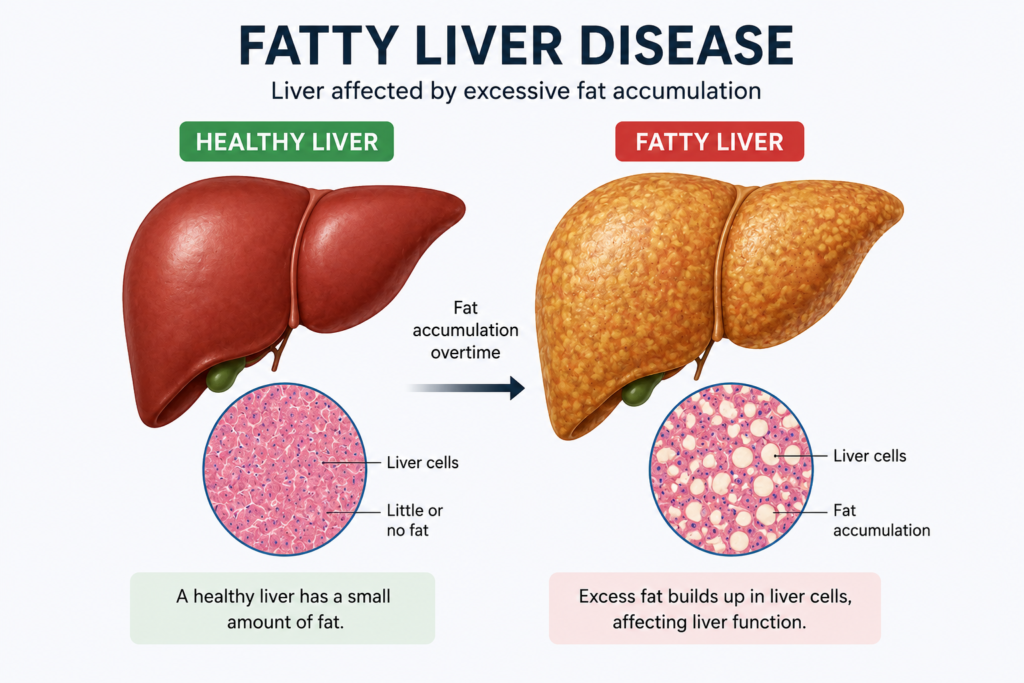
Fatty liver disease, also called hepatic steatosis, occurs when excess fat accumulates in the liver.
A small amount of fat in the liver can be normal. However, excessive accumulation may be associated with insulin resistance, obesity, diabetes, abnormal cholesterol levels and other metabolic conditions. In some people, ongoing liver injury can lead to inflammation and eventually fibrosis or cirrhosis.
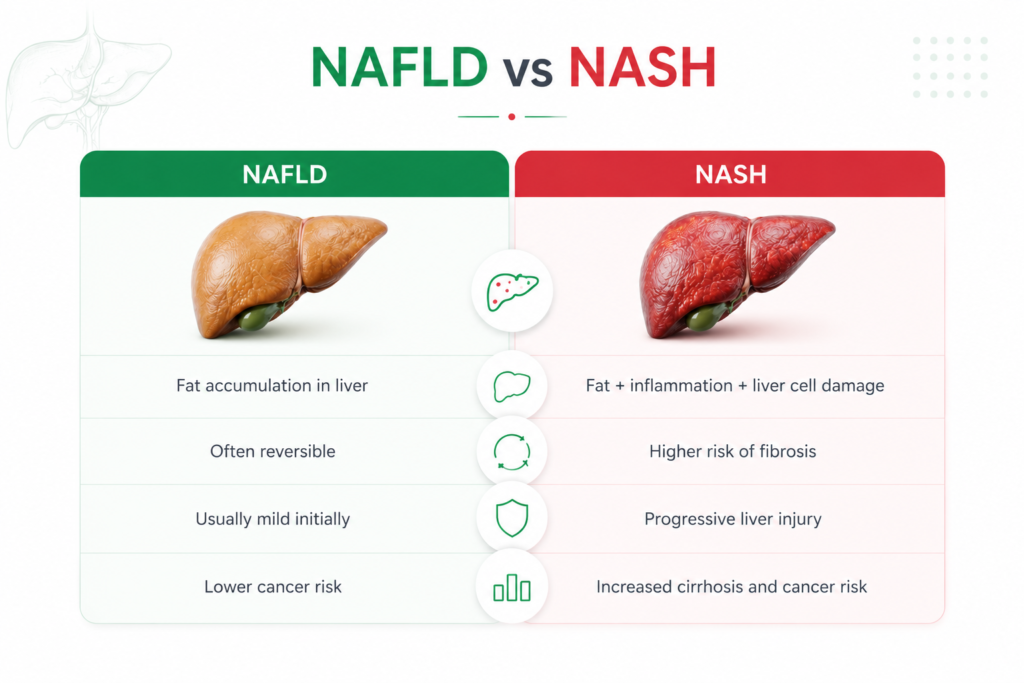
The newer medical term MASLD (Metabolic Dysfunction-Associated Steatotic Liver Disease) is increasingly used for fatty liver associated with metabolic risk factors. You may still see the older term NAFLD (Non-Alcoholic Fatty Liver Disease) in medical reports and online resources.
Why should fatty liver be taken seriously?
Early diagnosis and appropriate management can help:
- Reduce liver fat
- Improve metabolic health
- Reduce the risk of progressive liver inflammation
- Identify significant fibrosis early
- Lower the risk of complications associated with advanced liver disease
Importantly, not everyone with fatty liver develops cirrhosis. The risk depends on factors such as inflammation, fibrosis, diabetes, obesity and other metabolic conditions.
Symptoms of Fatty Liver Disease
Most people with early fatty liver disease have no noticeable symptoms. It is often discovered during an ultrasound, blood test or routine health check-up.
When symptoms occur, they may include:
- Fatigue or unexplained tiredness
- Mild discomfort in the upper right abdomen
- A feeling of fullness
- Abnormal liver enzymes
Symptoms such as jaundice, abdominal swelling, leg swelling, confusion or vomiting blood can indicate advanced liver disease and require urgent medical attention.
You do not need to wait for symptoms to consult a specialist. A fatty liver finding on ultrasound or persistently abnormal liver enzymes may warrant further assessment.
Reach Out for Expert Care
What Causes Fatty Liver Disease?
Fatty liver can develop for several reasons. The most common form is associated with metabolic health.
Metabolic Dysfunction-Associated Steatotic Liver Disease (MASLD)
MASLD is commonly associated with:
- Overweight or obesity
- Type 2 diabetes
- Insulin resistance
- High triglycerides or cholesterol
- High blood pressure
- Metabolic syndrome
- Sedentary lifestyle
- Polycystic ovary syndrome (PCOS)
Alcohol-Associated Fatty Liver Disease
Regular or excessive alcohol consumption can cause fat accumulation and liver injury. Continued alcohol exposure can increase the risk of inflammation, fibrosis and cirrhosis.
Other Causes
Fatty liver can also occur in association with certain medications, nutritional problems and less common metabolic conditions.
Acute fatty liver of pregnancy is a separate, rare pregnancy-related condition and requires urgent medical management.
Grades of Fatty Liver
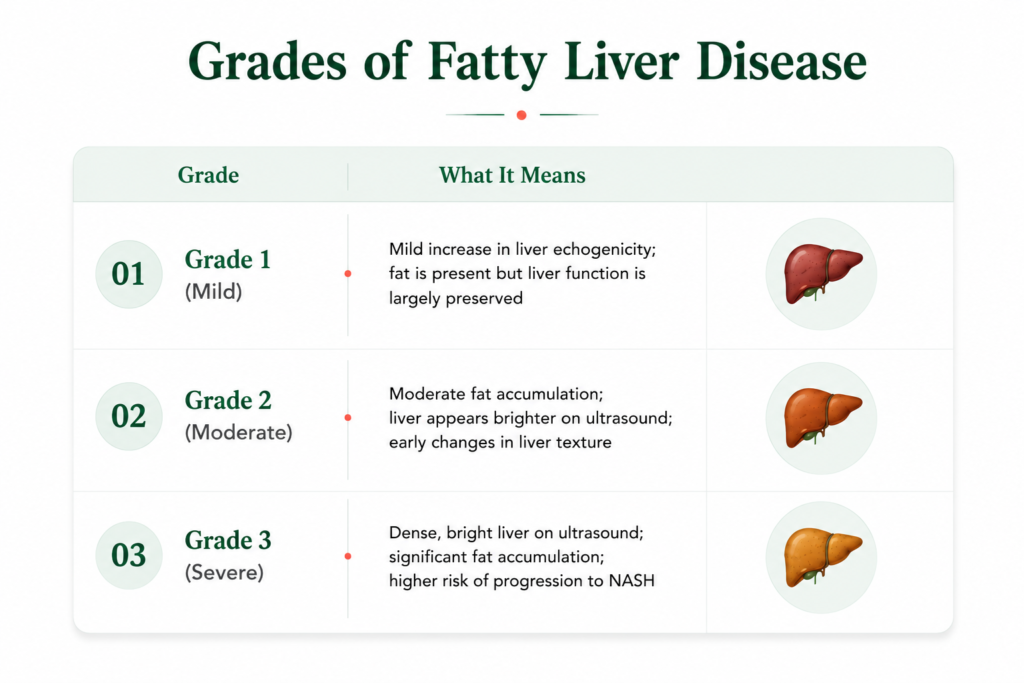
Ultrasound reports commonly describe fatty liver as Grade 1, Grade 2 or Grade 3, based on the appearance and degree of fat accumulation.
- Grade 1: Mild fatty change
- Grade 2: Moderate fatty change
- Grade 3: Severe fatty change
Does a higher grade mean more liver damage?
Not necessarily.
This is an important distinction. The ultrasound grade describes fat accumulation, but it does not accurately determine the amount of liver fibrosis or scarring.
A person with Grade 1 fatty liver may have significant metabolic risk factors, while another person with a higher ultrasound grade may not have advanced fibrosis.
That is why appropriate patients may need fibrosis risk assessment and FibroScan/elastography in addition to an ultrasound.
Ultrasound Shows Fatty Liver: What Should You Do Next?
If your ultrasound has detected fatty liver, the next step is to understand whether there is any evidence of liver injury or fibrosis.
Your specialist may assess:
- Liver enzymes and liver function
- Blood sugar and HbA1c
- Cholesterol and triglyceride levels
- Weight and metabolic risk factors
- Alcohol intake and medication history
- Risk of liver fibrosis
- Whether FibroScan or additional testing is appropriate
A fatty liver diagnosis does not automatically mean you need a liver biopsy or advanced imaging. Testing is selected according to your individual risk profile.
Diagnosis of Fatty Liver Disease in Gurgaon
A complete evaluation may include:
- Liver Function Tests: Liver enzymes and other blood markers help assess liver health.
- Metabolic Tests: HbA1c, blood glucose and lipid testing help identify diabetes and other metabolic risk factors.
- Ultrasound: An abdominal ultrasound can detect fatty changes in the liver, although it cannot reliably determine the degree of fibrosis.
- FibroScan: FibroScan is a non-invasive test that can help assess liver stiffness and estimate the likelihood of significant fibrosis.
- CT or MRI: These may be recommended selectively when additional information is required.
- Liver Biopsy: A biopsy is not routinely required for every patient with fatty liver. It may be considered in selected cases when the diagnosis or severity of liver injury needs clarification.
Reach Out for Expert Care
Fatty Liver Disease Treatment in Gurgaon
There is no single treatment that works for every patient. Management depends on the cause of fatty liver, metabolic health, fibrosis risk and overall liver function.
1. Weight Management
For people who are overweight, gradual and sustained weight loss can significantly reduce liver fat and may improve inflammation and fibrosis in appropriate patients.
The goal should be sustainable weight management rather than crash dieting.
2. Healthy Nutrition
A liver-friendly eating pattern generally focuses on:
- Vegetables and fibre-rich foods
- Whole grains and pulses
- Lean protein
- Nuts and seeds
- Healthy unsaturated fats
- Whole fruits in appropriate portions
It is important to reduce:
- Sugary drinks
- Added sugars
- Refined carbohydrates
- Ultra-processed foods
- Excess saturated fat
- Excess calorie intake
There is no single “fatty liver diet” suitable for everyone. Nutrition should be personalised according to weight, diabetes, cholesterol and other health conditions.
3. Regular Exercise
Regular physical activity can reduce visceral fat and improve insulin sensitivity, even when significant weight loss does not occur.
A combination of aerobic exercise, walking and resistance training may be recommended according to your health and fitness level.
4. Control of Diabetes and Cholesterol
Managing diabetes, high cholesterol, blood pressure and obesity is an important part of fatty liver treatment.
In selected patients, medications for diabetes, obesity or lipid disorders may also contribute to better metabolic and liver health.
5. Medicines for Selected Patients
Medication may be appropriate for certain patients depending on the type and stage of liver disease, fibrosis risk and associated metabolic conditions.
Treatment should always be individualised rather than based solely on the ultrasound grade.
Can Fatty Liver Disease Be Reversed?
In many people, liver fat can be significantly reduced and may even resolve with appropriate lifestyle and metabolic management.
The potential for improvement depends on the stage of disease.
- Simple fatty liver: Often responds well to sustained lifestyle changes.
- MASH: Inflammation and liver injury may improve with appropriate treatment.
- Fibrosis: Some fibrosis may improve when the underlying cause is effectively managed.
- Cirrhosis: Advanced scarring is generally not considered fully reversible, but treatment can help reduce complications and slow further progression.
The key is to identify and address the condition before significant liver damage develops.
When Does Fatty Liver Become Serious?
Fatty liver does not inevitably progress to cirrhosis. However, in some patients, ongoing inflammation can lead to:
Fat accumulation → MASH → Fibrosis → Cirrhosis → Liver-related complications
Patients with advanced fibrosis or cirrhosis require closer medical follow-up and appropriate surveillance.
Symptoms such as jaundice, abdominal swelling, black stools, vomiting blood, confusion or significant unexplained weight loss require prompt medical assessment.
MASLD vs MASH: What Is the Difference?
MASLD refers to metabolic dysfunction-associated steatotic liver disease, where excess liver fat occurs alongside metabolic risk factors.
MASH refers to a more active form in which liver fat is associated with inflammation and liver cell injury.
The older terms NAFLD and NASH are still commonly encountered in medical records and online searches.
MASH with significant fibrosis carries a greater risk of progression to cirrhosis and other liver complications than simple steatosis.
Who Is at Risk of Fatty Liver Disease?
Your risk may be higher if you have:
- Obesity or excess abdominal weight
- Type 2 diabetes
- Insulin resistance
- High triglycerides or cholesterol
- High blood pressure
- PCOS
- Sleep apnoea
- A sedentary lifestyle
- Metabolic syndrome
Early assessment is particularly important when several of these risk factors occur together.
Why Choose Dr. Ankur Garg for Fatty Liver Treatment in Gurgaon?
Effective fatty liver management requires more than treating an abnormal liver enzyme or ultrasound finding. Dr. Ankur Garg brings extensive experience in HPB surgery and comprehensive liver care, allowing patients to be evaluated across the full spectrum of liver disease.
Patients benefit from:
- 25+ years of experience in HPB and liver care
- Expertise in complex hepatobiliary conditions
- Assessment of fatty liver and fibrosis risk
- Access to advanced non-invasive liver assessment
- Multidisciplinary metabolic and nutritional support
- Management of advanced liver disease, cirrhosis and liver cancer when required
The objective is to identify what is driving your fatty liver, assess the risk of progression and create a sustainable treatment plan.
Take the First Step Towards Better Liver Health
A fatty liver diagnosis is a reason to understand your liver health, not a reason to panic. Early assessment can help identify metabolic risk factors and detect significant fibrosis before complications develop.
If you have recently been diagnosed with fatty liver, have abnormal liver enzymes, or need a second opinion, consult Dr. Ankur Garg for a personalised evaluation and treatment plan in Gurgaon.
For expert evaluation and personalised treatment, you can consult Dr. Ankur Garg. To book a consultation, call +91 87002 71068 or book an appointment.
Medical Disclaimer
This content is intended for general health information and does not replace a medical consultation, diagnosis or treatment plan. Fatty liver disease and its treatment vary between individuals. All treatment decisions should be made after appropriate clinical evaluation.

Dr. Ankur Garg's Medical Content Team
Dr. Ankur Garg’s medical content team specialises in creating accurate, clear, and patient-focused healthcare content. With strong clinical understanding and expertise in technical writing and SEO, the team translates complex medical information into reliable, accessible resources that support informed decisions and uphold Dr. Ankur Garg’s commitment to quality care.

 WhatsApp