
Can You Buy a Liver in India? Why Organs Have No “Price”
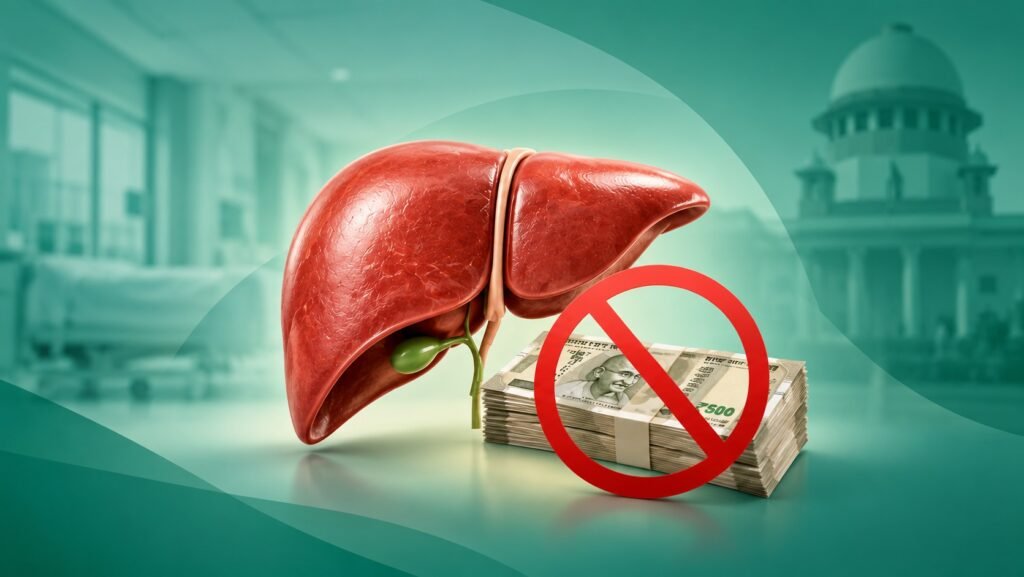
A liver has no price in India, and by law it never can. Yet every year, families facing liver failure search for the liver price in India, hoping money can close the gap. The gap is real: India performed 3,920 liver transplants in 2022 across 183 centres, the most living-donor procedures (3,183) of any country, according to The National Medical Journal of India. Only 18.8% came from deceased donors. This guide explains the law, the real treatment costs, and the lawful routes to a donor.
Is There a Liver Price in India? What the Law Says
No. India’s Transplantation of Human Organs and Tissues Act (THOTA), 1994, amended in 2011, prohibits commercial dealing in human organs. Anyone who pays for an organ, accepts payment for one, or arranges such a deal can face criminal prosecution, and a hospital involved can lose its registration.
What Does the THOTA Act Allow?
The law allows donation only when it is voluntary and unpaid. Living donors are usually near relatives: a spouse, parent, child, sibling, grandparent or grandchild. A friend or other non-relative can donate only after a State Authorisation Committee confirms that the gift stems from genuine affection and that no money changed hands.
A near relative who wants to donate must still meet the liver donor criteria in India, which cover age, blood group, BMI and liver health.
Why Does a Liver Have No Legal Price?
A human organ is not a commodity. If organs had a price, the poorest people would be pressured to sell part of their bodies, and patients with money would jump the queue. India’s law removes that incentive by making donation a gift.
Two lawful routes exist. In living donor liver transplant, a healthy adult gives a portion of the liver, which regenerates within about six to eight weeks in both donor and recipient. In deceased donation, the family consents after brain-stem death. When blood groups do not match, a SWAP liver transplant lets two families exchange donors legally.
What Does a Liver Transplant Actually Cost in India?
What families really pay is the cost of treatment, not a liver price in India. At LivCure, a liver transplant in Gurgaon generally costs ₹15 to ₹30 lakh, and a living donor transplant ₹18 to ₹25 lakh, depending on the patient’s condition and the hospital stay. Every figure pays for care, never for an organ.
What Does the Cost Include?
The estimate typically covers:
- Donor and recipient evaluation
- The surgery, operating theatre and surgical team
- ICU and ward care
- Initial immunosuppressant medicines
Long-term medicines, follow-up visits, complications after discharge and donor recovery are often billed separately, so ask for them in writing. Each stage is itemised in the liver transplant costs guide for patients and families, and it helps to understand why expenses can exceed the first estimate before budgeting. A wider range appears on the liver transplant cost in India page.
What Are the Legal Ways to Find a Liver Donor?
Living-Donor Liver Transplant
Living donors dominate liver transplantation in India: 3,183 of the 3,920 transplants in 2022 used a living donor. A donor is typically 18 to 55, has a compatible blood group and a healthy liver, and passes medical and psychological evaluation. The donor must give consent freely, and the hospital must obtain the required approvals. The full process, from evaluation to recovery, is mapped out in this complete guide to living donor liver transplant.
Deceased-Donor Liver Transplant
Here, a patient registers with an authorised transplant hospital, and organs are allocated by medical urgency, often measured by the MELD score. Deceased donors supplied only 18.8% of transplants in 2022, so waiting times can be long. The transplant team decides who is ready for surgery and how liver transplant teams select candidates.
How Can You Avoid Organ-Trade Scams?
Not only does demand far exceed supply, but brokers target desperate families, and Indian transplant researchers have documented kickbacks paid to middlemen. Anyone who offers an organ for a price is breaking the law, and so is the person who accepts. Be cautious if someone:
- Guarantees a donor or a transplant date
- Asks for money in exchange for an organ
- Offers a donor with unclear identity or inconsistent paperwork
- Prepares papers that falsely show the donor as a relative
- Avoids a registered hospital or the Authorisation Committee
Work only with registered transplant centres, insist on written estimates, and consider a second opinion before a liver transplant. Knowing what actually matters when choosing a liver hospital in Delhi NCR also helps families spot unreliable operators early.
Plan for Treatment, Not a Price Tag
The liver price in India is not a market figure, because an organ cannot legally be bought or sold. What patients can plan for is the cost of safe, well-organised treatment and a lawful donor pathway. If you or a family member needs a liver transplant, speak with Dr. Ankur Garg and the LivCure team about donor eligibility, estimates and approvals, or book an appointment.

 WhatsApp