
Liver Cirrhosis Treatment in India: Stages, Options, and When Transplant Is Needed
Cirrhosis is scarring of the liver, and established scarring is generally not fully reversible. But treating the cause, whether hepatitis B or C, alcohol, or fatty liver disease, can stop the damage from progressing. In some people, liver function improves, and part of the scarring regresses. Many people with compensated cirrhosis live for years with good care.
A liver transplant is for advanced disease. Not everyone with cirrhosis needs one. This guide explains treatment by stage, the main options in India, when transplant becomes relevant, and what costs to expect.
Can Liver Cirrhosis Be Reversed or Cured?
Early liver injury and fibrosis (early scarring) can often improve once the cause is removed. Cirrhosis is the late stage of scarring, where the liver’s structure has changed. At that point, a complete cure is not usually possible without a transplant.
Research suggests that liver fibrosis can regress and that some patients may experience partial reversal of cirrhosis after the underlying cause is effectively treated. However, improvement varies between patients, and established cirrhosis may not fully reverse.
What treatment can do:
- Slow or stop progression by curing hepatitis C, suppressing hepatitis B, stopping alcohol, or controlling weight, diabetes, and cholesterol in fatty liver disease
- Improve liver function in some patients, which may move them from decompensated back toward a more stable state
- Prevent complications such as fluid build-up, internal bleeding and confusion
- Identify transplant need early, while the patient is still strong enough for surgery
If liver function keeps declining despite good treatment, a transplant evaluation is the next step. It is a way to find out whether surgery would help, not a sign that you have run out of options.
Liver Cirrhosis Stages and Treatment Options
Doctors describe cirrhosis as compensated (the liver still copes and there are no major complications) or decompensated (complications have appeared).
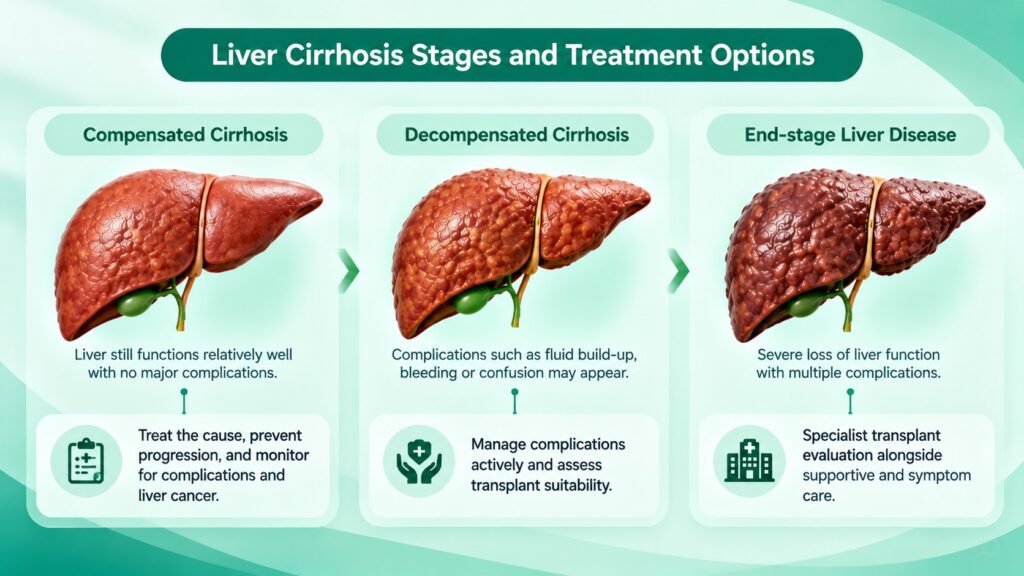
Two measures help doctors judge severity:
- Child-Pugh classification grades liver function as A (mild), B (moderate) or C (severe), using bilirubin, albumin, clotting (INR), fluid in the abdomen and confusion.
- MELD score (or MELD-Na) is calculated from blood tests, usually bilirubin, INR, creatinine, and sodium. It estimates short-term risk and helps prioritise transplant need. Higher scores mean more advanced disease.
Decompensation means cirrhosis has caused complications: ascites (abdominal fluid), bleeding from swollen gullet veins (varices), hepatic encephalopathy (confusion from toxin build-up) or worsening jaundice. Because two people with the same stage label can have very different liver function, treatment is always individualised.
Reach Out for Expert Care
Symptoms That Need Medical Attention
Seek emergency care immediately for:
- Vomiting blood or passing black, tarry stools
- New confusion, extreme drowsiness or behaviour change
- Fever with abdominal pain or tenderness
- Rapidly increasing abdominal swelling with breathlessness
- Markedly reduced urine output
Book a specialist appointment soon for:
- Gradual abdominal or leg swelling
- Yellowing of the eyes or skin
- Persistent fatigue, itching, poor appetite or weight loss
- Easy bruising or bleeding
- Disturbed sleep pattern
If you already have cirrhosis, do not wait for your next scheduled visit when emergency symptoms appear.
How Is Liver Cirrhosis Diagnosed and Monitored?
Diagnosis and follow-up usually combine:
- Blood tests: liver function, albumin, INR, platelet count, kidney function and sodium
- Ultrasound and elastography (such as FibroScan) to assess liver structure and stiffness
- Upper GI endoscopy to check for varices when indicated
- CT or MRI when further assessment is needed
Monitoring matters as much as the first diagnosis. People with cirrhosis have a higher risk of hepatocellular carcinoma (liver cancer), so guidelines generally advise ultrasound-based surveillance about every six months, sometimes with an AFP blood test. Regular review also tracks MELD and Child-Pugh scores, so any decline is caught early.
Treatment Options for Liver Cirrhosis in India
Treatment in India is layered: first the cause, then lifestyle and nutrition, then the specific complications.
Treat the cause
- Antiviral medicines for hepatitis B and C
- Complete alcohol cessation, with counselling or medical support where needed
- Weight, diabetes and metabolic risk management for fatty liver disease
- Disease-specific treatment for autoimmune or other causes
Protect the liver
- Adequate nutrition and protein (people with cirrhosis are often under-nourished), with limited salt
- Avoiding alcohol, unregulated herbal products and unnecessary painkillers
- Vaccination against hepatitis A and B, influenza and pneumococcus, as advised
Treat complications, which differ by problem
- Ascites: Salt restriction, diuretics and fluid drainage may help manage abdominal swelling.
- Varices: Beta-blockers or endoscopic banding can help prevent bleeding from enlarged veins.
- Hepatic encephalopathy: Medicines such as lactulose, sometimes with rifaximin, help manage confusion caused by toxin buildup.
- Infections and kidney problems: Early diagnosis and prompt treatment help prevent further complications.
- Liver cancer surveillance: Regular ultrasound, usually every six months, helps detect liver cancer early.
- Nutrition and monitoring: Adequate protein intake, balanced nutrition and regular follow-ups help maintain strength and monitor liver function.
Treatment is tailored to each patient’s condition. For difficult-to-control ascites or recurrent bleeding, procedures such as TIPS may be considered in selected cases. Patients with advanced cirrhosis may also need evaluation for a liver transplant.
When Is a Liver Transplant Needed?
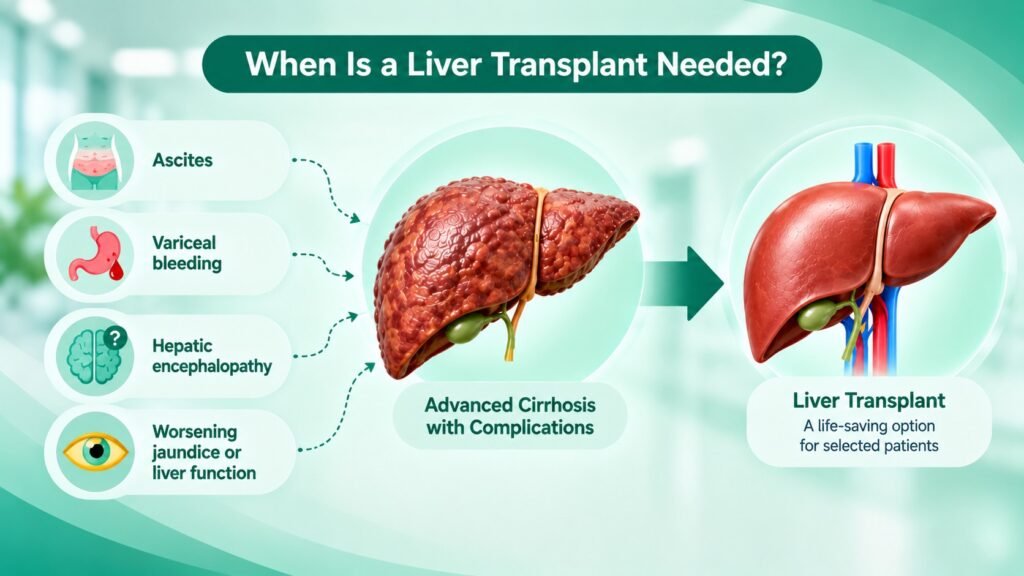
Doctors consider referral when cirrhosis causes:
- Ascites that is hard to control with medicines
- Recurrent encephalopathy
- Variceal bleeding that keeps returning
- Worsening liver function, such as a rising MELD score (referral is commonly considered once it reaches the mid-teens)
- Liver cancer within transplant criteria
Transplant assessment does not automatically mean surgery. The team looks at your overall health, heart and lung function, infections, nutrition, alcohol history where relevant, family support, and whether the expected benefit outweighs the risks. In India, transplants may be from a living donor (a compatible family member, assessed under national transplant law) or a deceased donor, where organ availability matters.
Liver transplantation can be a life-saving option for selected patients with advanced liver disease when medical management is no longer sufficient. Assessment of disease severity, associated complications and overall fitness helps doctors determine whether transplantation may offer a meaningful benefit.
For families seeking a liver transplant opinion, the LivCure team includes Dr. Ankur Garg, Group Director & HOD of Liver Transplant & HPB Surgery at Paras Health, Gurugram, with 25+ years of experience and expertise in managing advanced liver disease, including liver cirrhosis and end-stage liver disease. Having performed over 4,500 liver transplants, he reviews patient cases and advises whether and when a liver transplant may be appropriate.
Reach Out for Expert Care
Liver Cirrhosis Treatment Cost in India
No single figure covers all cirrhosis care. Costs fall into three very different groups:
- Ongoing medical management: medicines, blood tests, ultrasound and follow-up visits, which vary with the cause and stage
- Hospital treatment of complications: admission for bleeding, infection, drainage or ICU care, which depends on severity and length of stay
- Liver transplantation: the highest cost, covering evaluation, surgery, ICU, hospital stay and early follow-up
For transplant, LivCure’s cost guide lists a range of roughly ₹15 to ₹30 lakh at Gurgaon, as of 2026. The final amount depends on the type of transplant, hospital room category, complications and length of stay.
Other factors include disease severity, investigations, medicines after discharge, donor evaluation and long-term follow-up. Ask for an itemised estimate that states what is included, and treat any quoted figure as an estimate rather than a fixed price.
Choosing a Liver Specialist and Hospital in India
Cirrhosis care works best when the team works together. Look for:
- Coordinated services: hepatology, gastroenterology, interventional radiology, critical care and transplant surgery under one roof
- Transplant experience: an established programme with a transplant ICU and a clear evaluation process
- Emergency readiness: round-the-clock endoscopy and ICU support for bleeding or infection
- Transparent estimates: written, itemised costs and a clear explanation of what is not covered
- Long-term follow-up: a plan for monitoring, cancer surveillance and nutrition support
Ask how often the team treats patients with your condition and who manages emergencies after hours.
Consult Dr. Ankur Garg for Liver Cirrhosis Treatment in India
Seeking expert guidance for liver cirrhosis? Discuss your diagnosis, treatment options, and next steps with the LivCure team.
Dr. Ankur Garg, Group Director and HOD of Liver Transplant & HPB Surgery at Paras Health, Gurugram, has over 25 years of experience in managing complex liver conditions, including advanced cirrhosis and end-stage liver disease. He can assess a patient’s condition and help determine whether continued medical management or liver transplant evaluation may be appropriate.
Frequently Asked Questions
What is the best treatment for liver cirrhosis? expand_more
It depends on the cause and stage. Treating the underlying disease comes first, followed by managing complications and monitoring for liver cancer. Advanced disease may need transplant assessment.
Can cirrhosis improve without a transplant? expand_more
Yes, in many cases. Curing hepatitis C, suppressing hepatitis B or stopping alcohol can stabilise the liver and sometimes improve function. A transplant is needed only when the liver can no longer sustain life despite treatment.
How do doctors decide when a transplant is needed? expand_more
They assess the MELD score, complications such as recurrent bleeding, difficult ascites or encephalopathy, and overall fitness for surgery. Families can request a second opinion from Dr. Ankur Garg's team at LivCure.
How much does liver cirrhosis treatment cost in India? expand_more
Medical management, hospital care for complications and transplant differ greatly. LivCure lists liver transplant at roughly ₹15 to ₹30 lakh in Gurgaon. Request an itemised estimate for your case.
How long can someone live with decompensated cirrhosis? expand_more
Outlook varies widely with the cause, how well complications are controlled and whether transplant is possible. Without transplant, survival is shorter than in compensated cirrhosis, so early specialist review matters.

Dr. Ankur Garg's Medical Content Team
Dr. Ankur Garg’s medical content team specialises in creating accurate, clear, and patient-focused healthcare content. With strong clinical understanding and expertise in technical writing and SEO, the team translates complex medical information into reliable, accessible resources that support informed decisions and uphold Dr. Ankur Garg’s commitment to quality care.

 WhatsApp