
Jaundice Treatment in Gurgaon
Jaundice in adults is usually a sign of a liver, bile duct, or blood disorder. If you want to know the reason for jaundice, here is a simple explanation:
When bilirubin (a yellow pigment from broken-down red blood cells) builds up in the blood, the skin and whites of the eyes turn yellow. In adults, this almost always means the liver, bile ducts, or blood is not working normally.
This guide explains:
- Common causes of jaundice in adults
- Dangerous bilirubin levels
- Symptoms that need urgent medical attention
- Tests used to diagnose jaundice
- Treatment options available in Gurgaon
- When a liver transplant may be necessary
What Is Jaundice?
The liver’s function is to process bilirubin and excrete it from the body in bile. When this process breaks down for any reason, bilirubin builds up in the blood and causes the yellow color in the skin and eyes.
There are three types of jaundice in adults:
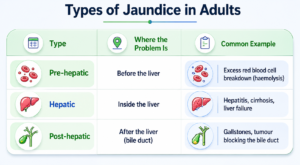
Common Causes of Jaundice in Adults
Liver-Related Causes
- Viral Hepatitis (A, B, C, E)
- Alcoholic Liver Disease
- Liver Cirrhosis
- Acute Liver Failure
- Fatty Liver Disease (NAFLD/NASH)
- Liver Cancer (HCC)
- Autoimmune Hepatitis
Bile Duct-Related Causes
- Gallstones:
- Biliary Disease / Cholangitis
- Pancreatic or Bile Duct Tumours:
Tumours pressing on the bile duct from outside are managed with Bile Duct Surgery or Pancreatic Surgery, depending on the case.
Blood-Related Causes
- Hemolytic Anemia: Red blood cells are destroyed faster than the liver can process the resulting bilirubin. The liver itself is healthy; it is simply overwhelmed.
Reach Out for Expert Care
Bilirubin Levels Explained
Your Liver Function Test (LFT) will show your total serum bilirubin. Here is how to read it:
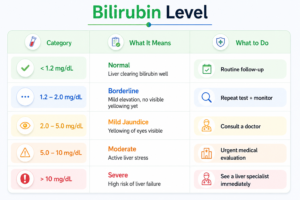
Key point: Visible jaundice (yellow eyes or skin) typically appears when bilirubin crosses 2.0 – 2.5 mg/dL. Levels above 10 mg/dL require urgent evaluation by a liver specialist.
Symptoms of Jaundice in Adults
Usual symptoms:
- Yellow skin and whites of the eyes
- Dark amber or tea-coloured urine
- Pale, clay-coloured stools
- Fatigue and weakness
- Loss of appetite
- Mild discomfort in the upper right abdomen
If jaundice appears alongside any of the following, it may indicate liver failure and needs emergency evaluation:
- Confusion or drowsiness – a sign of Hepatic Encephalopathy (ammonia not being cleared)
- Vomiting blood or black, tarry stools – internal bleeding from oesophageal varices
- Rapidly swelling abdomen – ascites, especially with fever, may indicate infection
- Bilirubin rising fast despite treatment – suggests acute liver failure
- Drop in urine output – may indicate Hepatorenal Syndrome (kidneys failing due to liver disease)
- Very high INR on blood test – liver cannot produce clotting factors
Dr. Ankur Garg’s team at Paras Hospital, Gurgaon, manages acute presentations of Acute Liver Failure and End-Stage Liver Disease with ICU-level support and full transplant capability.
How Is Jaundice Diagnosed?
Blood Tests
- LFT (Liver Function Tests) – total and direct bilirubin, ALT, AST, ALP, albumin. See LFT Test Explained in Simple Language
- CBC (Complete Blood Count) – checks for anaemia and low platelet count, common in liver disease
- Hepatitis Panel – screens for Hepatitis A, B, C, and E
Imaging
- Ultrasound Abdomen – first-line scan; checks liver texture, gallstones, bile duct width, and portal blood flow
- CT Scan / MRI – detailed view of tumours, duct obstruction, or cirrhosis
- FibroScan – non-invasive test that measures liver stiffness and fibrosis severity
- MRCP – detailed imaging of the bile ducts to look for blockages
Liver Biopsy
In selected cases, a small sample of liver tissue is taken to assess the degree of damage, particularly in unexplained chronic hepatitis.
Jaundice Treatment in Gurgaon: By Cause
There is no single treatment for jaundice. The right approach depends entirely on why bilirubin is elevated.
Viral Hepatitis A & E
- Rest, hydration, avoiding alcohol, and liver-toxic medications.
- Usually resolves in 4-8 weeks with supportive care.
Hepatitis B & C
- Hepatitis C: Direct-acting antivirals can eliminate the virus in 8-12 weeks
- Hepatitis B: Long-term antiviral therapy to suppress the virus and prevent cirrhosis
Alcoholic Liver Disease
- Immediate and complete alcohol cessation
- High-calorie, high-protein nutritional rehabilitation
- Corticosteroids in severe alcoholic hepatitis (selected cases)
- If liver failure has occurred, evaluation for Liver Transplant in Gurgaon
Obstructive Jaundice (Bile Duct Blockage)
- Bile Duct Surgery for structural problems or tumours in the duct
- Hepatectomy (Liver Resection)is the surgical removal of liver tumors, causing duct compression
- Minimally Invasive Surgery or laparoscopic approaches, where clinically appropriate
Fatty Liver Disease
Weight loss of 7-10% of body weight, metabolic control (diabetes, cholesterol, blood pressure), and regular monitoring to prevent progression.
See Fatty Liver Disease Treatment in Gurgaon.
Reach Out for Expert Care
Signs of Liver Failure in Jaundice Patients
Jaundice from a failing liver is a critical situation
These specific combinations signal that the liver may be in failure and that urgent specialist care is needed:
- Jaundice + Confusion (Hepatic Encephalopathy)
- Jaundice + Low Platelets
- Jaundice + Kidney Failure (Hepatorenal Syndrome)
- Jaundice + Rapid Ascites + Fever
- Persistent Jaundice That Does Not Improve
When Is a Liver Transplant Needed?
A liver transplant becomes necessary when the liver is too damaged to recover through medical treatment alone.
Dr. Ankur Garg performs Living Donor, Deceased Donor, and ABO-Incompatible Liver Transplants at Paras Hospital, Gurgaon. If you are unsure whether a transplant is the right step, a second opinion before a liver transplant can help you and your family decide with confidence.
Diet During Jaundice Recovery
Eat More Of
- Fresh fruits like papaya, lemon, beetroot, carrots
- Complex carbs, including oats, brown rice, and whole wheat roti
- Light protein like dal, paneer, boiled eggs, steamed fish
- Coconut water, barley water, and plain water for hydration
Avoid Completely
- Alcohol
- Fried, fatty, and processed foods
- Raw or undercooked shellfish
- Paracetamol beyond 2g/day
- Any herbal supplement without a doctor’s approval
Why Patients Trust Dr. Ankur Garg for Jaundice Treatment in Gurgaon?
Dr. Ankur Garg is a leading Liver Transplant and HPB Surgeon in Gurgaon at Paras Hospital, Gurgaon, with over 25 years of experience and 4,500+ liver transplant and major HPB procedures to his credit. The LivCure team includes hepatologists, transplant surgeons, intensivists, nutritionists, and transplant coordinators – all under one roof.
This integrated approach allows rapid diagnosis, emergency management, transplant assessment, and long-term liver care under one roof
Book Appointment Email: info@livcureindia.com
Final Words
Yellow eyes or high bilirubin are not conditions to ignore. In many adults, jaundice is the body’s warning sign that the liver or bile ducts are under stress. Identifying the exact cause early can make the difference between simple treatment and life-threatening liver failure. With advanced diagnostics, transplant expertise, and multidisciplinary liver care, timely treatment can improve quality of life.

Dr. Ankur Garg's Medical Content Team
Dr. Ankur Garg’s medical content team specialises in creating accurate, clear, and patient-focused healthcare content. With strong clinical understanding and expertise in technical writing and SEO, the team translates complex medical information into reliable, accessible resources that support informed decisions and uphold Dr. Ankur Garg’s commitment to quality care.

 WhatsApp