
Why Can Liver Transplant Expenses Be Higher Than the Initial Estimate?

When a patient is considering a liver transplant, one of the first questions is often about the expected treatment expense. Hospitals usually provide an initial estimate based on the patient’s medical condition and standard treatment requirements.
However, the final liver transplant expenses can sometimes be higher than the initial estimate. This does not mean that the original estimate was incorrect. Liver transplantation is a complex treatment, and the patient’s needs can change before, during, or after surgery.
This blog sheds light on the factors that can increase the final expense and can help patients plan more realistically and ask the right questions before treatment.
Why Can the Final Liver Transplant Expenses Increase?
1. Additional Pre-Transplant Tests May Be Required
Before transplantation, both the recipient and, in the case of a living donor transplant, the donor undergo detailed medical evaluation.
Routine assessments may include blood tests, imaging, cardiac evaluation, infection screening, liver and kidney function tests, and other specialist consultations. However, if doctors identify an underlying health concern, additional investigations may be required.
For example, a patient with a heart, kidney, or infectious condition may need further evaluation before being cleared for transplantation.
These additional investigations may not always be part of the initial estimate.
Patients can learn more about the overall treatment journey in our guide to liver transplant in India
2. The Patient May Need a Longer ICU Stay
After liver transplantation, patients are closely monitored in the intensive care unit. The expected ICU duration is generally included when an initial treatment estimate is prepared.
However, recovery does not follow exactly the same timeline for every patient.
If the patient requires prolonged monitoring or treatment, the ICU stay may be extended. Additional ICU days can increase expenses because of room charges, nursing care, monitoring, investigations, medicines, and other supportive treatment.
This is why patients should ask the transplant centre how many ICU days are included in the initial estimate and what the additional daily charges would be if a longer stay becomes necessary.
3. Hospitalisation May Take Longer Than Expected
The same principle applies to the overall hospital stay.
An initial estimate is generally based on an expected length of stay. If hospitalisation extends beyond the package period, additional room, nursing, diagnostic, medication, and medical charges may apply.
This is particularly important for patients travelling from another city or country, as a longer hospital stay can also increase accommodation and travel-related expenses.
For patients considering treatment in the capital, LivCure also provides information about liver transplant in Delhi.
4. Complications Can Require Additional Treatment
One of the biggest reasons why the final expense can differ from the initial estimate is the development of a medical complication.
Possible complications after liver transplantation can include infection, bleeding, kidney dysfunction, bile duct problems, vascular complications, or rejection.
Not every patient develops these problems, and their management varies depending on severity.
Treatment may involve additional medicines, investigations, procedures, prolonged ICU care, or further surgery. Consequently, these expenses may fall outside a standard transplant package.
5. Additional Medicines and Blood Products May Be Needed
Transplantation can involve the use of several medicines and medical products during hospitalisation.
The initial estimate may include routine medication and a defined quantity of blood or blood products. If the patient requires additional quantities, the final bill may increase.
Similarly, some patients may need medicines or supportive treatment that were not anticipated when the original estimate was prepared.
Before admission, families should ask the hospital whether medicines, blood products, surgical consumables, and other commonly used items are included in the quoted package.
6. Donor-Related Expenses May Add to the Total
In a living donor liver transplant, there are two patients involved: the recipient and the donor.
The donor requires medical evaluation, surgery, hospitalisation, investigations, medicines, and follow-up care.
Some hospitals provide a combined estimate covering both donor and recipient, while others may provide separate estimates.
Families should therefore confirm exactly what the quoted amount covers and whether donor-related expenses are included.
For patients exploring treatment options in North India, our information on liver transplant in Gurgaon can also help with understanding the treatment pathway.
7. Long-Term Treatment Continues After Discharge
After transplantation, recipients require regular follow-up and monitoring. They generally need immunosuppressive medicines to reduce the risk of organ rejection, along with periodic blood tests and medical consultations.
The exact medicines, dosage, monitoring schedule, and duration can vary from patient to patient.
These ongoing expenses are different from the hospitalisation and surgical costs included in an initial transplant estimate.
How Can Families Prepare for Unexpected Expenses?
Patients should ask the transplant coordinator for a detailed written estimate before proceeding with treatment.
Important questions include:
- How many ICU days are included?
- How many hospitalisation days are covered?
- Are donor expenses included?
- Are medicines included during the entire hospital stay?
- Are blood and blood products included?
- What happens if complications occur?
- What are the charges for additional ICU or hospital days?
- Are post-discharge consultations included?
- Which medicines and investigations will be required after discharge?
- Which expenses are specifically excluded from the package?
Having these details in writing can give families a clearer understanding of the potential financial commitment.
Does a Higher Final Bill Mean the Initial Estimate Was Wrong?
Not necessarily.
An initial estimate is generally based on the expected course of treatment, while the final bill reflects the patient’s actual medical requirements.
For example, a patient who has an uncomplicated recovery may stay within the estimated budget. Another patient may require additional ICU care, investigations, medicines, or treatment for complications.
Therefore, it is more useful to view the initial estimate as a planned treatment cost rather than a guaranteed final bill.
Plan for Both the Transplant and the Recovery
When planning financially for liver transplantation, families should look beyond the surgery itself.
The overall treatment journey can involve:
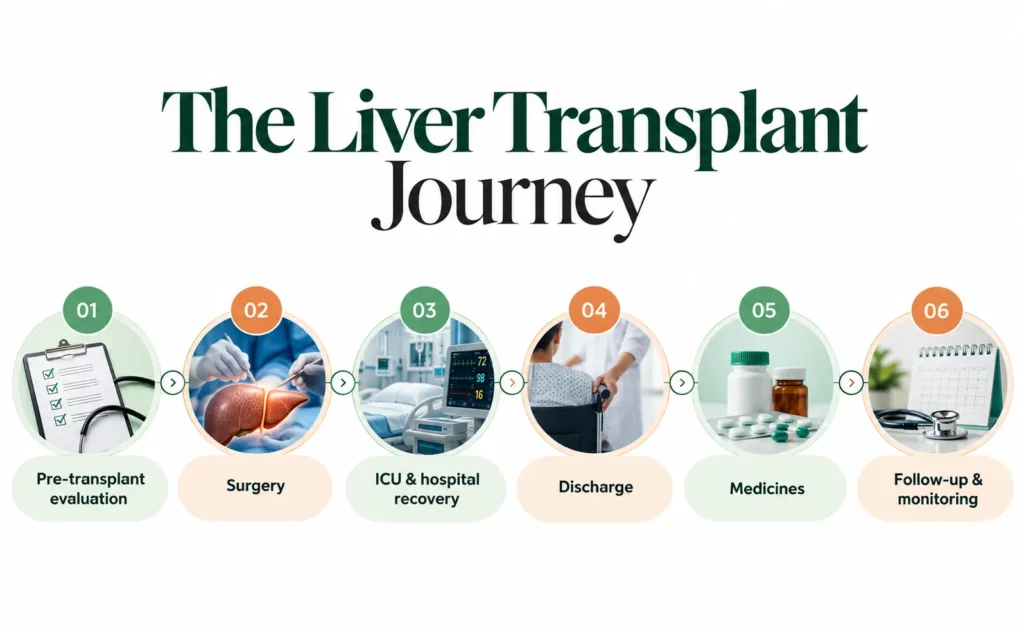
Each stage can involve different expenses.
Understanding these potential costs in advance can help patients make better-informed financial arrangements
If you are exploring liver transplantation, you can also read our detailed guide on liver transplant cost in India for an overview of the factors that influence treatment expenses.
Final Takeaway
The initial estimate for a liver transplant is an important starting point, but it should not always be treated as the final amount a family will pay. Differences can arise because of the patient’s individual medical needs, length of hospitalisation, complications, additional treatment, donor-related care, and long-term follow-up.
For patients considering transplantation in India, understanding the complete treatment journey rather than looking at the surgery cost alone can make financial planning much more transparent.

 WhatsApp