
Liver Transplant Recovery Timeline: Week-by-Week Guide for Patients

“What happens after a liver transplant?” is one of the most common questions patients and families ask before surgery.
Liver transplant recovery does not happen overnight. It is a step-by-step process that involves healing, regular monitoring, medications, lifestyle adjustments, and ongoing support from the transplant team.
This week-by-week liver transplant recovery guide explains the typical recovery timeline, important milestones, and practical tips to help patients achieve the best possible outcome after liver transplantation.
How Long Does Liver Transplant Recovery Take?
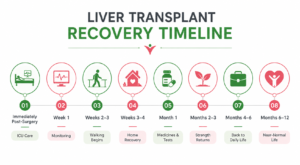
Most patients stay in the hospital for 2 to 3 weeks after liver transplant surgery. Recovery at home typically takes 3 to 6 months, while full recovery and return to normal activities may take 6 to 12 months.
The exact liver transplant recovery time depends on:
- The patient’s health before surgery
- Whether the transplant was from a living or deceased donor
- Post-operative complications, if any
- Adherence to immunosuppressant medications
- Attendance at follow-up appointments
While some patients regain strength quickly, complete healing and long-term stabilisation of the transplanted liver can take up to a year.
What Happens Immediately After Liver Transplant Surgery?
Liver transplant surgery takes 6 to 12 hours depending on whether it is a living donor liver transplant or a deceased donor transplant.
After surgery, the patient is moved directly to the transplant ICU.
The care team monitors:
- New liver function: bilirubin, INR, liver enzymes
- Blood pressure, oxygen levels, kidney function
- Bleeding or clotting complications
- Early signs of rejection
Most patients remain on a ventilator for the first 24 to 48 hours. This is standard post-operative care.
Anti-rejection medicines (immunosuppressants) are started immediately and continue for life.
Liver Transplant Recovery Process: Week by Week
Week 1: ICU Monitoring and Stabilisation
The most medically intensive phase of liver transplant surgery recovery.
What patients experience:
- Abdominal swelling and nausea
- Extreme fatigue and drowsiness
- Multiple drains, tubes, and monitoring lines
Milestone: Patient breathing independently off the ventilator, usually by end of week 1.
Week 2: ICU to Ward Transfer
If the liver transplant recovery process is progressing, patients move to the general ward by end of week 1 or early week 2.
What happens:
- Surgical drains and monitoring lines removed gradually
- Oral liquids introduced, then soft foods
- Physiotherapy begins: sitting upright, standing with support
Early walking is medically important. It reduces the risk of blood clots and supports lung recovery.
Weeks 3 to 4: Hospital Discharge
Most patients are discharged between day 14 and day 21 after liver transplant surgery.
Before discharge, the team confirms:
- Liver function tests stable and improving
- Immunosuppressant levels in correct therapeutic range
- No active infection or rejection
- Patient and family understand the full medicine schedule and warning signs
Discharge means the patient is stable enough to continue recovery at home under close outpatient monitoring. It does not mean recovery is complete.
Recovery After Liver Transplant: First Month at Home
The first month at home is the most critical phase of outpatient recovery.
What to expect:
- Surgical wound healing but still tender
- Appetite improving gradually
- Blood tests every 2 to 3 days in early weeks
- Frequent transplant clinic visits
Activity restrictions:
- Short slow walks indoors, increasing distance daily
- No lifting anything heavier than 2 to 3 kg
Key Milestones: Months 2 to 3
A clear shift in the liver transplant recovery process happens during months 2 and 3.
Key milestones:
- Walking independently for longer distances including short outdoor walks
- Light household activity manageable
- Blood test frequency reduces as values stabilise
- Immunosuppressant doses often adjusted downward
- Gentle exercise introduced
Symptoms present before transplant, including jaundice, fluid in the abdomen, and severe fatigue, are typically resolved or significantly improved by this stage.
Outpatient follow-up remains frequent. Acute rejection is most common in the first 3 months and is most treatable when caught early through regular monitoring.
Months 4 to 6: Returning to Daily Activities
What becomes possible:
- Light or desk-based work with transplant team approval
- Driving once confirmed safe
- Moderate exercise: brisk walks, light yoga, swimming
- Short distance travel
- Near-normal dietary habits
Months 6 to 12: Life After Liver Transplant
By 6 months, most patients are living significantly better than before surgery.
Long-term care focus:
- Follow-up visits reduce in frequency but never stop
- Routine blood tests continue monitoring liver function and immunosuppressant levels
- Liver cancer screening added to long-term care plan
- Healthy weight, balanced diet, and regular exercise become daily priorities
Most patients return to full normal activity by 9 to 12 months.
Liver transplant patients at leading Indian centres live 20 to 30 years after surgery with consistent medicines and follow-up.
Liver Transplant Donor Recovery Time
Recovery after liver donor surgery is separate from recipient recovery and follows its own timeline.
For living donors:
- Hospital stay: 5 to 7 days after donor surgery
- Return to light activity: 3 to 4 weeks
- Full recovery: 4 to 6 weeks for most donors
- Return to physically demanding work: 6 to 8 weeks
The liver regenerates to near-normal size within 6 to 8 weeks after donation.
Nutrition During Liver Transplant Surgery Recovery
Recommended:
- Small, frequent meals throughout the day
- High-protein foods to support muscle rebuilding
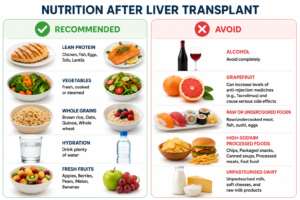 fresh fruits
- Adequate hydration
Strictly avoid:
- Raw or undercooked meat, fish, sushi, unpasteurised dairy (serious infection risk in immunosuppressed patients)
- Grapefruit and grapefruit juice (directly interferes with tacrolimus)
- Alcohol, completely and permanently
- High-sodium processed foods
Exercise After Liver Transplant
| Phase | Activity |
| Weeks 1 to 2 post-discharge | Rest, short assisted walks only |
| Weeks 3 to 8 | Gentle walks, increasing duration daily |
| Months 2 to 3 | Light stretches, yoga, extended walks |
| Months 4 to 6 | Brisk walking, swimming, light cycling |
| After 6 months | Most exercise with team approval |
No heavy lifting or strenuous activity for a minimum of 3 months.
Regular exercise after transplant improves muscle mass, manages steroid-related weight gain, reduces cardiovascular risk, and supports long-term transplant health.
Key Takeaways
- Most patients stay in hospital for 2–3 weeks after liver transplant surgery.
- Recovery at home usually takes 3–6 months.
- Full recovery may take 6–12 months.
- Anti-rejection medicines must be taken lifelong.
- Regular follow-up is essential for long-term success.
- Most patients can return to a normal and active life after transplantation.

 WhatsApp