
Liver Transplant Success Rate in India: What Families Should Know
If your doctor has recommended a liver transplant, the first question most families ask is simple: what are the chances of liver transplant success?
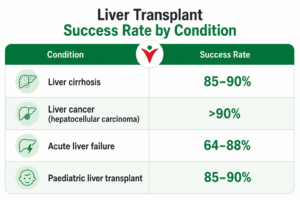
The liver transplant success rate in India is now 85-90% at one year , comparable to the best liver transplant centres globally.
This guide explains what the numbers mean, what affects your outcome, and what patients can do to improve their chances.
What Is the Liver Transplant Success Rate in India?
When doctors talk about liver transplant success, they look at two things:
- Patient survival rate – how long the person lives after the transplant
- Graft survival rate – how long the transplanted liver keeps working
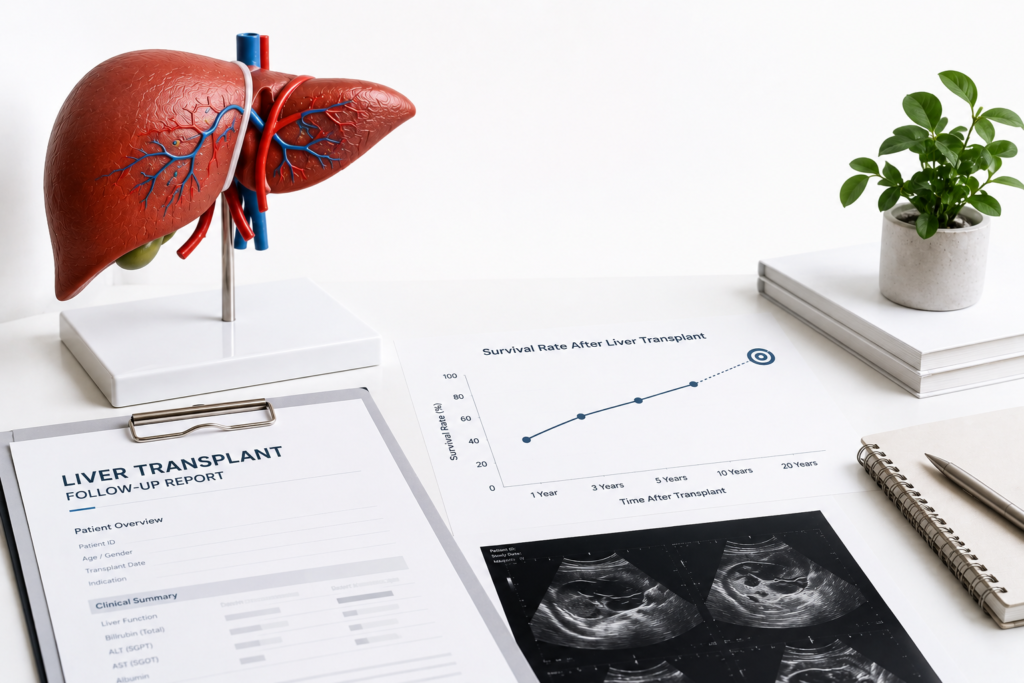
Here is what the data shows at leading Indian transplant centres:
| Time After Transplant | Survival Rate |
| 1 Year | 85% – 90% |
| 3 Years | 80% – 85% |
| 5 Years | 70% – 75% |
| 10 Years | ~60% – 65% |
| 20 Years | >50% |
Many liver transplant recipients in India go on to live full, active lives for 25 to 30 years after surgery.
Liver Transplant Life Expectancy: What Can Patients Expect?
One of the most common questions families ask is: how long can someone live after a liver transplant?
Many patients live for 20 to 30 years post-transplant. Some live even longer.
Life expectancy after a liver transplant depends on the patient’s age, the underlying condition, overall health at the time of surgery, and how well post-transplant care is followed.
The first 12 months after surgery are the most critical. Once a patient successfully completes that period, long-term survival generally improves.
What Factors Affect Liver Transplant Success Rate?
No two patients are the same. Several factors influence how well a person does after liver transplant surgery.
-
The underlying liver condition
The disease that caused liver failure matters. Common indications include liver cirrhosis, acute liver failure, end-stage liver disease, and liver cancer. Some conditions such as hepatitis B, require specific antiviral medications after transplant to prevent recurrence.
- How sick the patient is before surgery
Patients who are evaluated and listed early recover faster. This is why it is important not to delay getting a liver specialist opinion if you or a family member has been diagnosed with liver disease.
Check transplant eligibility at LivCure →
Living donor vs. deceased donor transplant
Patients receiving a living donor liver transplant tend to have better short-term outcomes as the surgery can be planned in advance, and the recipient does not have to wait.
Both approaches achieve survival rates of 85-90% at one year. However, if a suitable living donor is available, your transplant team may recommend this route for better timing and faster recovery.
The transplant centre’s experience
The surgical team’s experience directly affects outcomes. High-volume centres that perform liver transplants regularly with dedicated transplant ICUs, specialist hepatology support, and experienced transplant coordinators report better results.
At LivCure, liver transplant surgeries are performed at Paras Hospital Gurugram, Paras Hospital Panchkula, and Paras Hospital Patna , all of which are equipped with dedicated transplant infrastructure.
The programme in Paras Health, Gurugram is led by Dr. Ankur Garg, with over 25 years of experience and more than 4,500 liver transplants and HPB procedures. Meet Dr. Ankur Garg →
Liver Transplant Rejection: Can It Happen?
Yes, rejection is a known risk after any transplant. It happens when the body’s immune system recognises the new liver as foreign and tries to attack it.
There are two types:
- Acute rejection – can occur in the first weeks or months. It is usually treatable if caught early through regular monitoring.
- Chronic rejection – develops slowly over months or years. This is why long-term follow-up and medication adherence are so important.
How to Improve Your Chances of Survival After Liver Transplant
You have more control over your outcomes than you might think. Here is what your care team will guide you on:
- Take anti-rejection medications every single day, never skip doses
- Attend all follow-up appointments, especially in the first year, which is the highest-risk period
- Avoid alcohol completely; this applies to all transplant recipients regardless of the original cause
- Report any new symptoms immediately; fever, yellowing of skin, abdominal pain, or unusual fatigue should always be discussed with your transplant team
- Eat well and maintain a healthy weight, as a balanced diet supports recovery
- Do not miss cancer screening; long-term immunosuppression increases cancer risk; routine screenings are essential
Final Thoughts
Behind every search for “liver transplant success rate” is a person looking for one thing – hope.
The data gives it. Nine in ten patients survive the first year. Thousands go on to live normal, full lives for decades after surgery. The outcomes are real. With early evaluation and the right liver care, they are genuinely on your side.

 WhatsApp