
Platelet Count in Liver Disease: What Level Is Dangerous?
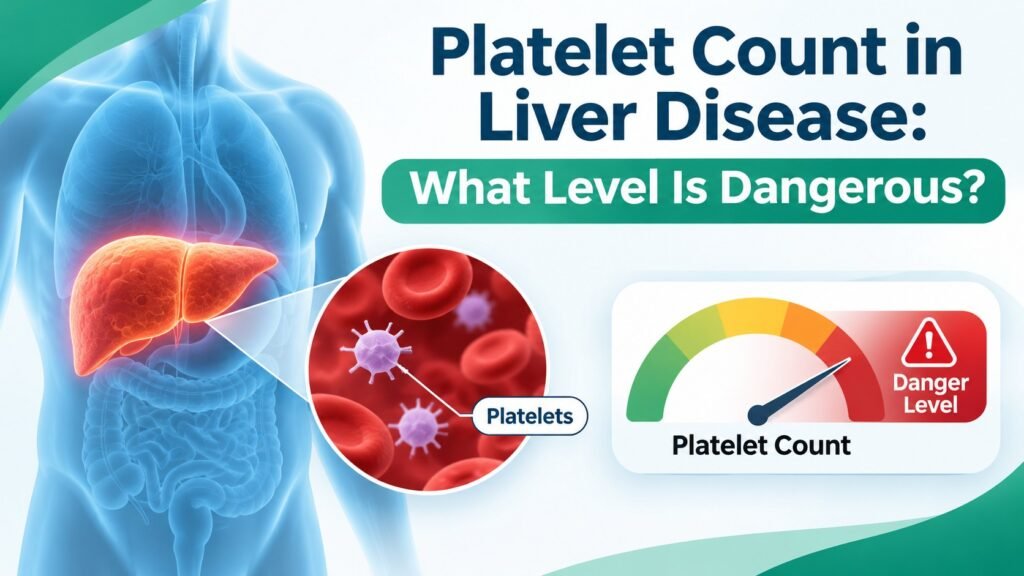
In liver disease, a platelet count below 100,000/µL (1 lakh) needs medical evaluation, below 50,000/µL needs closer attention, especially before procedures, and below 20,000/µL can signal serious bleeding risk. However, platelet count alone cannot predict danger in cirrhosis: active bleeding, INR, liver function and planned procedures decide urgency. Isliye apni report hamesha liver doctor ke saath samjhein, sirf number dekhkar nahi.
At a glance
- Normal platelet count: 150,000–450,000/µL (1.5–4.5 lakh)
- Most common cause in liver disease: portal hypertension with an enlarged spleen (hypersplenism)
- Emergency signs: vomiting blood, black stools, bleeding that will not stop
- Important: low platelets do not automatically mean cirrhosis
Platelet Count in Liver Disease: Kyun Zaroori Hai?
Platelet count in liver disease is one of the simplest blood markers doctors use to judge how the liver and spleen are coping. Platelets are small blood cells that help blood clot, and a low count is called thrombocytopenia (platelets ka kam hona).
Bahut se mareez routine CBC test mein hi pehli baar dekhte hain ki platelets kam hain, jabki liver ke koi khaas symptoms tab tak nahi hote. In advanced liver cirrhosis, a falling count often reflects portal hypertension rather than a primary blood disorder. Lekin yaad rakhein, kam platelets ka matlab hamesha cirrhosis nahi hota. In fatty liver disease, platelets usually fall only when fibrosis has progressed.
Request a Consultation
What Is a Normal Platelet Count? (Normal Range Kya Hai?)
A normal platelet count is 150,000–450,000 per microlitre (/µL), written in Indian reports as 1.5–4.5 lakh/µL. Laboratory ranges vary slightly, so always compare your result with the reference range printed on your own report.
| Platelet count | General interpretation |
| 150,000–450,000/µL | Normal range |
| 100,000–150,000/µL | Mildly low |
| 50,000–100,000/µL | Moderately low |
| Below 50,000/µL | Significantly low |
| Below 20,000/µL | Severe thrombocytopenia; spontaneous bleeding becomes a concern |
Why Does Liver Disease Cause Low Platelets? (Platelets Kam Kyun Hote Hain?)
Liver disease lowers platelets mainly because scarring raises pressure in the portal vein, which enlarges the spleen and traps platelets. Usually, more than one mechanism works at the same time:
- Portal hypertension (liver mein blood pressure badhna): scarring raises pressure in the portal vein, and blood backs up towards the spleen.
- Hypersplenism (spleen ka zyada platelets ko trap karna): the enlarged spleen holds on to and destroys more platelets than normal.
- Reduced thrombopoietin: a damaged liver makes less of this hormone, which tells the bone marrow to produce platelets.
- Bone marrow suppression: alcohol, viral infections and some medicines can reduce platelet production.
Har mareez mein yeh sab ek jaisa nahi hota. These changes are most common in chronic hepatitis, advanced fatty liver and cirrhosis, and a simple fatty liver without fibrosis usually keeps platelets normal.
What Platelet Count Is Dangerous in Liver Disease? (Kitna Low Hona Dangerous Hai?)
There is no single number that marks danger for every patient, but these thresholds help in practice:
- Below 100,000/µL : needs clinical evaluation. It can reflect portal hypertension or advanced fibrosis, often before symptoms appear.
- Below 50,000/µL : needs particular attention, especially before endoscopy, dental work or surgery, when your doctor may plan extra precautions.
- Below 20,000/µL : can indicate a serious bleeding risk and usually needs prompt medical assessment.
A count of 50,000/µL is not a universal emergency. In cirrhosis, the body’s clotting system is rebalanced, so platelet count and INR do not predict bleeding accurately on their own. The Baveno VII consensus, for example, uses platelet count together with liver stiffness to assess portal hypertension, not as a stand-alone danger score. Urgency depends on active bleeding, other blood tests, liver function, medicines and any planned procedure.
Isliye sirf ek number dekhkar ghabrana ya use ignore kar dena, dono galat hain. Report ko apne hepatologist ke saath context mein samjhein.
Symptoms and Warning Signs of Low Platelets
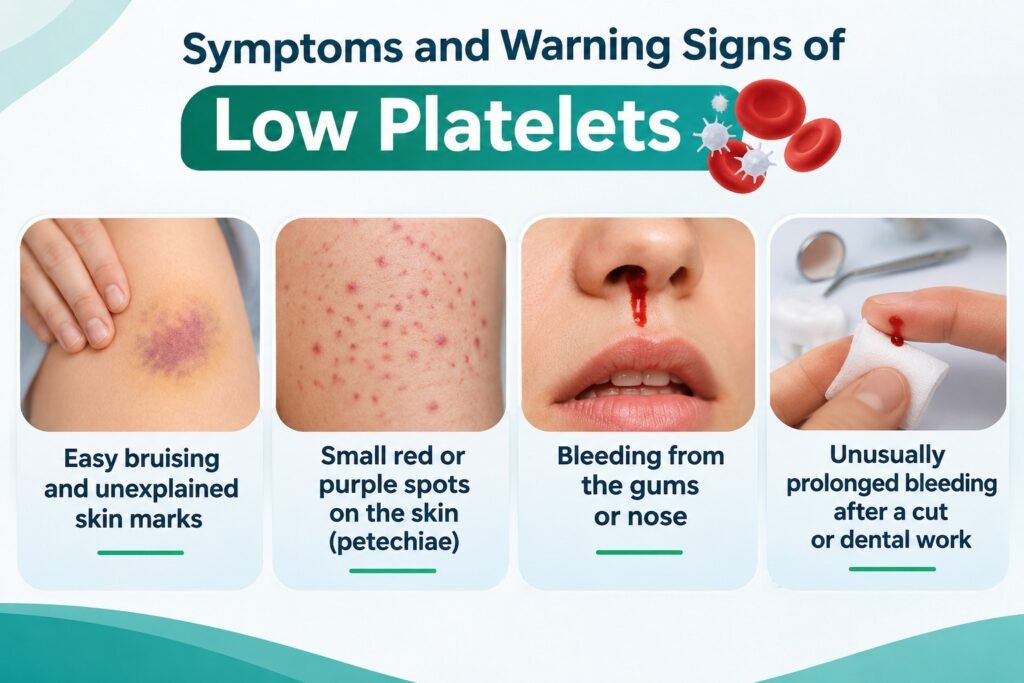
Mild thrombocytopenia often causes no symptoms at all. When symptoms do appear, they usually include:
- Easy bruising and unexplained skin marks (bina chot ke neel padna)
- Small red or purple spots on the skin (petechiae)
- Bleeding from the gums or nose
- Unusually prolonged bleeding after a cut or dental work
Urgent warning signs: vomiting blood, black or tarry stools, or heavy bleeding that does not stop. In someone with cirrhosis, these can point to bleeding from enlarged veins in the food pipe or stomach. Khoon ki ulti ya kali potty ho to der na karein, turant emergency mein jaayein.
How Is Low Platelet Count Diagnosed in Liver Patients?
Doctors combine several tests, because no single report can explain why platelets are low:
- CBC (Complete Blood Count): confirms the platelet count and checks other blood cells.
- Liver Function Test (LFT) and PT/INR: assess liver damage and clotting. LFT akele se platelet kam hone ka kaaran pata nahi chalta.
- Abdominal ultrasound: checks liver texture, spleen size and signs of portal hypertension.
- Portal hypertension assessment: may include liver stiffness measurement (elastography) or endoscopy.
- Additional tests: to rule out infections, vitamin B12 or folate deficiency, and medicine-related causes.
How Is Low Platelet Count Managed in Liver Disease? (Ilaaj Kaise Hota Hai?)
Management focuses on the cause, not on a single platelet-raising fix:
- Treat the underlying liver condition, as explained in our liver cirrhosis treatment guide.
- Manage portal hypertension and other cirrhosis complications.
- Address alcohol use, infections and nutritional deficiencies where relevant.
- Platelet transfusion only in selected situations, such as active bleeding or certain procedures.
- Thrombopoietin receptor agonists for selected patients, particularly before certain procedures.
Apne se platelet badhane wale supplements ya gharelu nuskhe shuru na karein. Liver disease mein inke safe aur effective hone ka pakka saboot nahi hai, aur kuch liver ko nuksaan bhi pahuncha sakte hain. Hamesha pehle apne hepatologist se poochhein.
Final Thoughts:
A low platelet count in liver disease is a signal to investigate, not a diagnosis by itself. Get evaluated if your count is below 100,000/µL, and seek emergency care for vomiting blood, black stools or bleeding that will not stop. A specialist can interpret your platelet count alongside INR, ultrasound and liver function tests, and advise on the next steps, including liver transplant evaluation where relevant.
Platelet report samajhne ke liye hepatologist ya gastroenterologist se milna sabse safe raasta hai. Dr. Ankur Garg and the LivCure India team can help patients understand their liver health, explore appropriate treatment options and navigate the next steps in their care. Timely medical guidance can make a difference in managing liver disease and preventing complications
This article is for education and does not replace medical advice.

 WhatsApp