
Life After Liver Transplant: What Patients Can Realistically Expect

Life after a liver transplant can gradually return to a more normal routine. Many recipients are able to work, exercise, travel and spend time with family after recovery. However, a transplant also means lifelong attention to medicines, follow-up appointments, food safety and overall health.
This guide explores what life after a liver transplant can realistically look like, from medicines and diet to work, exercise, travel and long-term health.
Quick Facts about Life after a Liver Transplant
After a successful liver transplant, many people can resume everyday activities, although recovery time varies.
- Anti-rejection medicines are usually lifelong.
- Regular blood tests and follow-up appointments remain important.
- A balanced diet and food-safety precautions become part of long-term care.
- Exercise, work and travel are often possible after recovery.
- Long-term outcomes vary between individuals.
If you are still recovering from surgery, see our liver transplant recovery timeline for a week-by-week overview of the early recovery period.
Medications After Liver Transplant
Do You Need Anti-Rejection Medicines for Life?
Usually, yes. Your immune system can recognise the transplanted liver as foreign and attack it. Immunosuppressant medicines reduce this immune response and help prevent rejection.
The medicines and doses can change over time, but you should never stop, skip or change an anti-rejection medicine without instructions from your transplant team.
Take medicines at the times prescribed, keep a current medication list and check with your doctor before starting new medicines, vitamins or herbal supplements. Some foods, including grapefruit, can interact with certain immunosuppressants.
Diet After Liver Transplant: What Changes Long Term?
There is no single diet that applies to every transplant recipient. Your nutritional needs can depend on your weight, kidney function, blood sugar, cholesterol and other health conditions.
A balanced diet generally includes vegetables, fruits, whole grains, adequate protein and healthy fats, while limiting excess salt, sugar and saturated fat.
Which Foods Should You Avoid After Liver Transplant?
As immunosuppressants weaken the immune response, food-borne infections can be more serious. Follow food-safety precautions and avoid foods that are raw, undercooked, unpasteurised or improperly stored.
Our detailed diet after liver transplant guide covers food choices in more detail.
Can You Drink Alcohol After a Liver Transplant?
Alcohol advice depends on the reason for your transplant and your individual health. If your liver disease was related to alcohol, complete abstinence is generally recommended.
Can You Live a Normal Life After a Liver Transplant?
For many recipients, life gradually becomes less focused on the transplant itself. Once recovery progresses, work, exercise, travel and family activities can become part of everyday life again.
- Returning to Work – Many people return to work within several months, although the timing depends on their recovery and the type of job. Desk-based work may be possible sooner than physically demanding work.
- Exercise After Liver Transplant – Regular physical activity can support cardiovascular health, strength and weight management. Walking is often introduced during recovery, followed by gradually increasing activity as advised by your transplant team.
- Travel After Liver Transplant- Travel is often possible once your condition is stable. Carry medicines in your hand luggage, take enough medication for the trip, keep a medication list with you and discuss international travel with your transplant team beforehand.
Life Expectancy After a Liver Transplant
There is no single life expectancy that applies to every recipient. Some people live for decades after transplantation, but individual outcomes depend on factors such as age, the original liver disease, overall health, rejection, infections, other complications and adherence to treatment.
Long-term care is therefore important even when you feel well. Regular blood tests can help doctors identify changes in liver function or medication levels before problems become serious.
For more information, see our guide to liver transplant success rate in India.
Warning Signs After a Liver Transplant
Rejection does not always cause obvious symptoms, which is why regular blood tests and follow-up appointments are important.
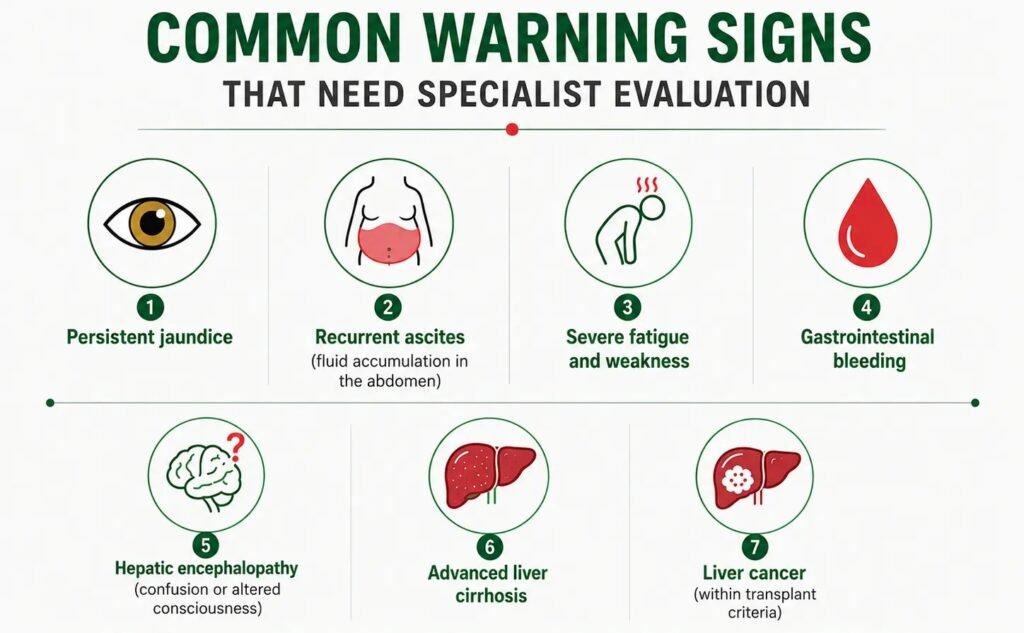
Contact your transplant team if you develop symptoms such as:
- Fever or chills
- Yellowing of the skin or eyes
- Dark urine
- Unusual abdominal pain
- Persistent vomiting or diarrhoea
- Unexplained fatigue
- Other sudden changes in your health
These symptoms do not automatically mean rejection, but they should not be ignored.
Final Takeaway
Life after liver transplant can include work, travel, exercise, family and many everyday activities. The key difference is that your health now requires ongoing maintenance.
Taking medicines consistently, attending follow-up appointments, eating safely, staying active and reporting concerning symptoms promptly can all help protect your health and the transplanted liver.
For personalised advice, always follow the recommendations by expert liver transplant team.

 WhatsApp