
Can a Liver Cirrhosis Patient Eat This? 40 Indian Foods Checked
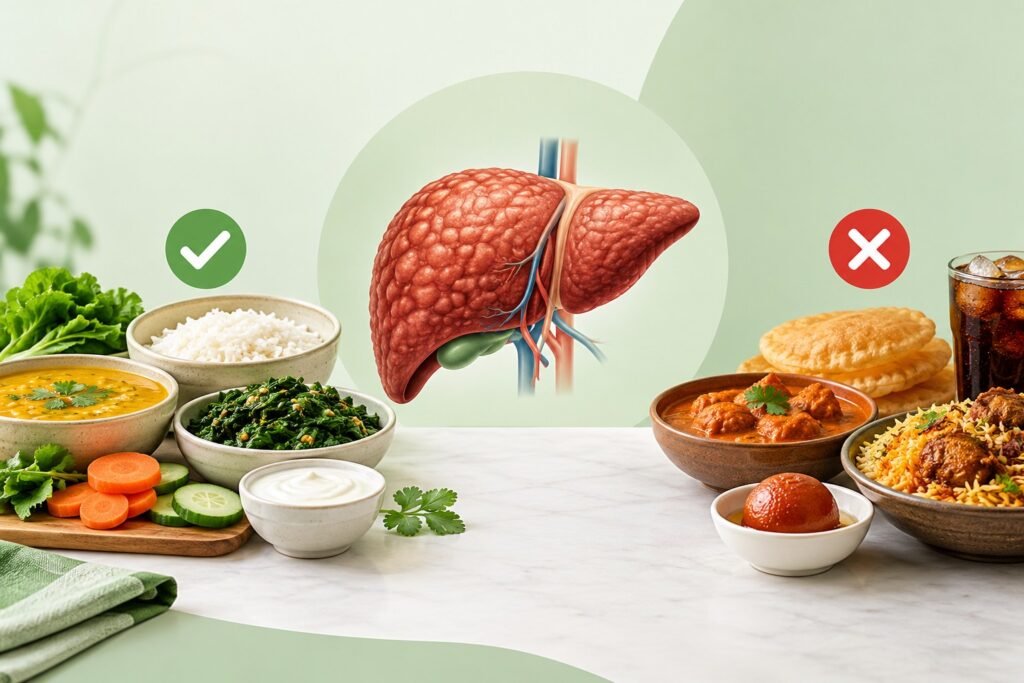
Can I eat rice, dal, roti, curd, eggs, or mango with liver cirrhosis? Families ask this at almost every consultation. The short answer: most everyday Indian foods are fine, some need modification, and a few are best avoided in specific situations. What suits you depends on complications such as ascites (fluid in the abdomen), your nutritional status and your doctor’s advice. Here is a food-by-food guide to foods for a liver cirrhosis patient in India.
What Can a Liver Cirrhosis Patient Eat?
- Eat regular, balanced meals. Undernourishment is a bigger everyday danger than any single food.
- Do not cut protein. Dal, eggs, curd, milk, fish and paneer are usually encouraged.
- Keep food safe: freshly cooked, no raw seafood, no alcohol.
- Salt and fluid limits are individual. Follow your treating team.
There is no single universal cirrhosis diet.
Request a Consultation
40 Indian Foods Checked: Suitable, Limit or Avoid?
Suitable means generally fine. Limit means adjust portion, salt, oil or sugar. Avoid applies only in the situation stated.
5 Diet Rules Every Liver Cirrhosis Patient Should Know
- Protein and energy first: Muscle loss is a major risk. EASL, AASLD and Indian (INASL) guidance all advise roughly 1.2-1.5 g protein per kg body weight daily.
- Small, frequent meals: Avoid gaps longer than 3-4 hours while awake, and add a late-evening snack (about 200 kcal, such as milk with a banana or roasted chana) to shorten the overnight fast.
- Less salt, not tasteless food: With ascites, about 2 g sodium (roughly 5 g salt) a day is commonly advised. Sendha and rock salt count too. Restriction so strict that you eat less can backfire.
- No alcohol, and eat safely: Avoid raw shellfish, undercooked meat, and unpasteurised dairy.
- Fluid limits only when advised: They are usually reserved for significantly low blood sodium.
Does the Cirrhosis Diet Change With Complications?
Yes. Ascites calls for tighter salt control. Diabetes means watching portions of mango, mithai and juices. Kidney problems make potassium (banana, coconut water, spinach) and fluids worth reviewing. Poor appetite calls for calorie-dense small meals and a dietitian’s help.
Practical tip: cook with less salt but add flavour through jeera, ginger, garlic, coriander, lemon juice and curry leaves. Read labels on packaged foods, since hidden sodium in ready-to-eat snacks, sauces and instant mixes adds up quickly. Eating less because food tastes bland is a real risk, so keep meals appetising. Ask your doctor or a dietitian to personalise portions, especially if you have diabetes, kidney disease or ascites.
One myth needs correcting: patients with hepatic encephalopathy (confusion from liver failure) should not stop protein. Trials showed restriction brings muscle loss without benefit, and guidelines no longer recommend it. For calorie targets and a sample meal chart by stage, see our liver cirrhosis diet plan for compensated and decompensated stages.
When Should You Consult a Liver Specialist?
Seek prompt medical assessment for worsening abdominal swelling, new confusion or drowsiness, vomiting blood, black stools, persistent vomiting, or very poor food intake. Diet supports, but never replaces, liver cirrhosis treatment. If complications keep returning despite good care, ask whether you should be assessed for liver transplant in India.
Need personalised guidance on liver cirrhosis? Dr. Ankur Garg is a leading liver transplant surgeon and HPB (Hepato-Pancreato-Biliary) specialist at Paras Health, Gurugram, with over 25 years of experience. He and his team at LivCure India support patients with cirrhosis and advanced liver disease, from diagnosis and ongoing care to transplant evaluation.
This article is general information and does not replace personal medical advice.

 WhatsApp