
Whipple Surgery in India
Whipple surgery, also known as pancreaticoduodenectomy, is one of the most complex operations performed for pancreatic and biliary diseases. It is considered the gold-standard surgical treatment for cancers and tumors located in the head of the pancreas and surrounding structures.

Dr. Ankur Garg, one of the renowned HPB surgeons in India, performs Whipple surgery at Paras Hospital, Gurugram, providing specialised care for patients with pancreatic cancer, bile duct cancer, ampullary cancer, and other complex pancreatic disorders.
What Is Whipple Surgery?
Whipple surgery is a major abdominal operation designed to remove cancerous or diseased tissue from the pancreas and surrounding digestive organs.
During the procedure, the surgeon removes:
- Head of the pancreas
- Duodenum (first part of the small intestine)
- Gallbladder
- Lower portion of the bile duct
- Nearby lymph nodes
- Sometimes a small part of the stomach
Once these structures are removed, the digestive tract is carefully reconstructed to allow normal digestion and passage of food.
Whipple surgery remains the most effective curative treatment for pancreatic cancer and several other pancreatic and biliary conditions.
Understanding Whipple Surgery: Who needs it?
Whipple surgery is recommended when disease affects the head of the pancreas or nearby structures and surgical removal offers the best chance of cure.
Common conditions treated include:
-
Pancreatic Cancer
The most common indication for Whipple surgery. When pancreatic cancer is detected early and remains confined to the pancreas, surgery offers the best chance for long-term survival.
- Ampullary Cancer
Cancer arising at the ampulla of Vater, where the bile duct and pancreatic duct meet the intestine.
- Cholangiocarcinoma (Bile Duct Cancer)
Particularly tumors involving the lower portion of the bile duct.
- Duodenal Tumors
Both benign and malignant tumors affecting the first part of the small intestine.
- Chronic Pancreatitis
Selected patients with severe pain, obstruction, or complications that do not respond to medical treatment.
- Pancreatic Cysts and Precancerous Lesions
Including: IPMN (Intraductal Papillary Mucinous Neoplasm), Mucinous cystic tumors and High-risk pancreatic cysts
Reach Out for Expert Care
How Is Whipple Surgery Performed?
Whipple surgery is performed under general anaesthesia and generally takes between 5 and 8 hours.
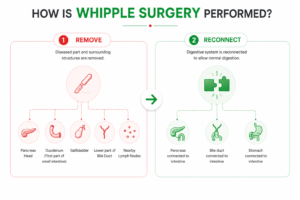
Whipple surgery steps include:
Stage 1: Resection
The diseased organs and tissues are carefully removed.
This typically includes:
- Head of pancreas
- Duodenum
- Gallbladder
- Part of the bile duct
- Regional lymph nodes
In selected cases, a small part of the stomach may also be removed.
Stage 2: Reconstruction
After removal, the digestive system is reconstructed.
The surgeon reconnects:
- Remaining pancreas to the intestine
- Bile duct to the intestine
- Stomach to the intestine
This allows food, digestive enzymes, and bile to continue functioning normally.
The reconstruction phase is technically demanding and highlights the importance of choosing an experienced HPB surgeon.
Risks and Complications of Whipple Surgery
Although Whipple surgery is safe in experienced hands, it remains a major operation.
Potential complications include:
- Pancreatic fistula
- Delayed gastric emptying
- Bleeding
- Infection
- Bile leakage
- Blood clots
- Pneumonia
- Digestive difficulties
Modern surgical protocols, advanced ICU care, and enhanced recovery programs have reduced whipple surgery complication rates.
Recovery After Whipple Surgery
Recovery after Whipple’s procedure occurs in stages.
Days 1-3
- ICU or high-dependency monitoring
- Pain control
- Fluid management
- Early mobilization
Days 4-7
- Gradual introduction of liquids
- Walking assistance
- Breathing exercises
Weeks 2-4
- Recovery at home
- Small frequent meals
- Reduced activity levels
- Follow-up appointments
Weeks 6-8
- Return to routine activities
- Improved energy levels
- Continued nutritional support
Long-Term Recovery
Some patients may require:
- Pancreatic enzyme supplements
- Nutritional counseling
- Diabetes monitoring
- Ongoing oncology treatment
Diet After Whipple Surgery
Nutrition plays a crucial role in recovery.
Patients are generally advised to:
- Eat small, frequent meals
- Increase protein intake
- Stay hydrated
- Avoid heavy fatty foods initially
- Take prescribed enzyme supplements if needed
Whipple Surgery Cost in India
One of the major reasons patients choose India is affordability. The total cost of Whipple procedure varies based on the surgical approach (open, laparoscopic, or robotic), hospital stay, ICU duration, and post-operative care needs.
For a full breakdown, visit our detailed Whipple surgery cost in India page. The LivCure team is happy to provide a personalised cost estimate after an initial consultation.
Why Trust Dr. Ankur Garg for Whipple Surgery?
Dr. Ankur Garg is among India’s top HPB and pancreatic surgeons.
Key strengths include:
- 25+ years of surgical experience
- 4,500+ major surgeries performed
- Expertise in pancreatic cancer surgery
- Advanced laparoscopic and robotic techniques
- Multidisciplinary treatment approach
- Patient-focused care philosophy
His practice focuses on complex pancreatic, liver, and biliary disorders requiring specialized surgical expertise.
Consult a Whipple Surgery Specialist in India
If you or a loved one has been advised Whipple surgery, obtaining an expert opinion from a dedicated pancreatic surgeon can help ensure the best treatment strategy.
Dr. Ankur Garg and the LivCure team provide comprehensive evaluation, advanced surgical care, and long-term follow-up for patients with pancreatic and biliary diseases.
You can contact us today to discuss your case, request a second opinion, or receive a personalised treatment plan.
FAQs
Senior liver specialist with extensive experience in transplant and complex liver care.
Is Whipple surgery a major operation? expand_more
Yes. Whipple surgery is one of the most complex abdominal operations and should ideally be performed by experienced HPB surgeons.
How long does Whipple surgery take? expand_more
The procedure typically takes between 5 to 8 hours depending on the complexity of the case.
What is the hospital stay after Whipple surgery? expand_more
Most patients remain in hospital for approximately 7 to 10 days.
How long does full recovery take? expand_more
Most patients return to normal activities within 6 to 8 weeks, although complete recovery may take several months.
Can Whipple surgery cure pancreatic cancer? expand_more
For patients with localized pancreatic cancer, Whipple surgery offers the best chance of long-term survival and potential cure when combined with appropriate cancer treatment.

Dr. Ankur Garg's Medical Content Team
Dr. Ankur Garg’s medical content team specialises in creating accurate, clear, and patient-focused healthcare content. With strong clinical understanding and expertise in technical writing and SEO, the team translates complex medical information into reliable, accessible resources that support informed decisions and uphold Dr. Ankur Garg’s commitment to quality care.


 WhatsApp