
Biliary Atresia Treatment and Liver Transplant in Children
When a baby develops persistent jaundice, pale stools or poor weight gain, parents naturally want answers quickly. Sometimes, these symptoms can be caused by a serious condition called biliary atresia, in which the bile ducts that carry bile from the liver to the intestine become blocked, damaged or progressively scarred.
Biliary atresia requires early specialist evaluation because treatment is time-sensitive. In many children, the first surgical treatment is the Kasai portoenterostomy, which aims to restore bile drainage from the liver. However, some children continue to develop liver damage despite surgery and may eventually require a paediatric liver transplant.
At LivCure, Dr Ankur Garg provides specialist care for children with complex liver and biliary conditions, including biliary atresia and paediatric liver transplantation. The focus is on early assessment, appropriate surgical treatment and timely transplant evaluation when required.
What Is Biliary Atresia?
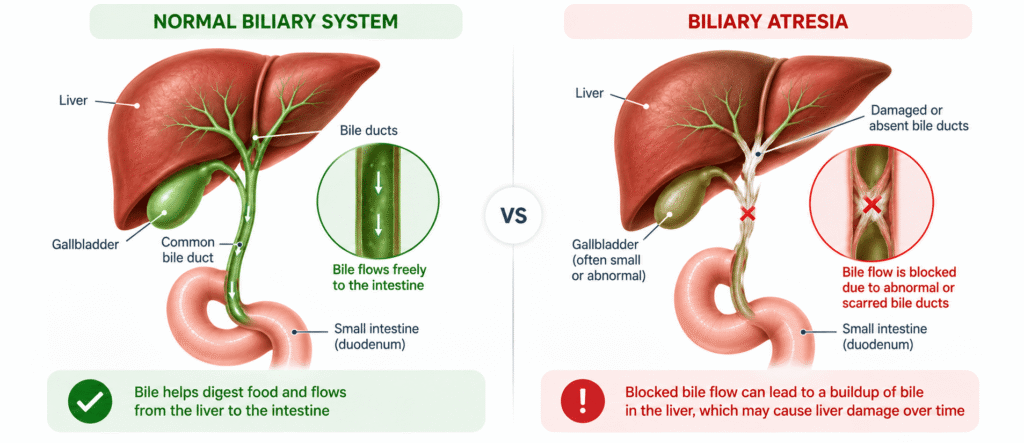
Biliary atresia is a rare and serious liver disease that affects babies. In this condition, the bile ducts outside the liver become blocked, scarred or absent. As a result, bile cannot flow normally from the liver into the intestine.
Bile helps the body digest fats and remove certain waste products from the body. When bile remains trapped in the liver, it can cause progressive liver damage and eventually lead to fibrosis, cirrhosis and liver failure.
Biliary atresia is one of the important causes of chronic liver disease requiring liver transplantation in children.
What Are the Symptoms of Biliary Atresia?
The condition usually becomes noticeable during the first few weeks of life. Parents may observe:
- Persistent yellowing of the skin or eyes
- Pale, grey or clay-coloured stools
- Dark urine
- Poor weight gain
- Irritability or reduced feeding
- An enlarged liver or spleen in some children
Jaundice is common in newborns, but jaundice that persists beyond the expected period should be evaluated, particularly when accompanied by pale stools or dark urine.
Early recognition matters because the success of biliary atresia surgery is influenced by the child’s age and the extent of liver damage at the time of treatment.
Reach Out for Expert Care
How Is Biliary Atresia Diagnosed?
There is no single test that confirms every case of biliary atresia. Diagnosis usually involves several investigations to understand liver function and determine whether bile ducts are present and functioning normally.
The evaluation may include:
- Blood tests including liver function and bilirubin levels
- Abdominal ultrasound
- Imaging of the bile ducts in selected cases
- Assessment for other causes of prolonged neonatal jaundice
- Liver biopsy in selected children
- Intraoperative cholangiography when surgery is being considered
Because biliary atresia can resemble other causes of neonatal jaundice, specialist assessment is important before deciding on treatment.
Biliary Atresia Treatment: Why Timing Matters
The main initial surgical treatment for suitable children is the Kasai portoenterostomy.
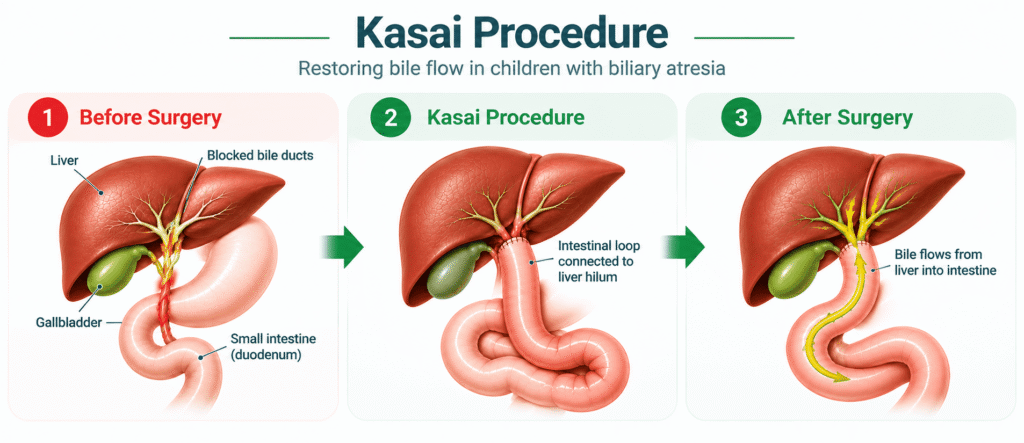
The procedure aims to create a pathway for bile to drain from the liver into the intestine using the remaining bile duct structures at the liver hilum.
The earlier the condition is recognised and treated, the better the opportunity to establish bile flow before significant irreversible liver damage develops.
However, the Kasai procedure is not a guaranteed cure. Some children establish good bile drainage and continue to do well for years, while others develop ongoing liver disease and may eventually require transplantation.
What Is the Kasai Procedure?
The Kasai portoenterostomy, also called the Kasai procedure, is a specialised operation performed for biliary atresia.
During the surgery, the surgeon removes the damaged extrahepatic bile duct tissue and connects a loop of the small intestine to the area at the liver hilum where microscopic bile duct channels may still drain bile.
The goal is to allow bile to flow directly from the liver into the intestine.
When successful, bile drainage can improve jaundice and help slow the progression of liver damage.
The procedure requires specialised paediatric hepatobiliary surgical expertise and careful postoperative monitoring.
What Happens After Kasai Surgery?
After the Kasai procedure, the child requires close follow-up. Doctors monitor:
- Bilirubin levels
- Liver function
- Growth and nutrition
- Signs of infection or cholangitis
- Development of portal hypertension
- Liver fibrosis and cirrhosis
- Overall clinical progress
Even when the Kasai procedure successfully restores bile flow, children with biliary atresia generally require long-term liver follow-up.
Some children may develop complications such as recurrent cholangitis, portal hypertension, poor growth or progressive liver disease.
Reach Out for Expert Care
When Is Liver Transplant Needed for Biliary Atresia?
A liver transplant for biliary atresia may become necessary when the child’s liver develops advanced or irreversible damage despite previous treatment.
Transplant evaluation may be considered when a child develops:
- Progressive liver failure
- Advanced cirrhosis
- Significant portal hypertension
- Recurrent complications after Kasai surgery
- Poor growth or nutritional deterioration
- Severe complications related to chronic liver disease
- Other signs that the liver is no longer functioning adequately
Importantly, not every child with biliary atresia needs a liver transplant immediately. The timing depends on the child’s liver function, growth, complications, previous treatment and overall clinical condition.
Pediatric Liver Transplant for Biliary Atresia
When transplantation becomes necessary, the damaged liver is replaced with a healthy donor liver or an appropriate portion of a donor liver.
For children, transplantation is particularly specialised because the child’s size, anatomy, nutritional status and immune system all need to be considered.
Depending on the circumstances and availability, a child may undergo:
Living Donor Liver Transplant
A healthy, medically suitable donor can donate a portion of their liver. Because the liver can regenerate, the remaining liver in the donor and the transplanted portion in the child can grow over time.
Living donor transplantation can allow the transplant to be planned rather than waiting indefinitely for a deceased donor organ.
Deceased Donor Liver Transplant
A suitable liver from a deceased donor may be allocated through the appropriate organ donation and allocation system.
The transplant team evaluates the child’s medical urgency, size, blood group and other factors when determining the most appropriate transplant option.
LivCure’s pediatric liver transplant programme includes care for children with conditions such as biliary atresia and other serious liver diseases.
Life After Liver Transplant in Children
A liver transplant is not the end of treatment. It marks the beginning of a new phase of long-term care.
Children generally require lifelong follow-up and medicines called immunosuppressants to reduce the risk of rejection. Regular monitoring helps doctors assess liver function, growth, nutrition, medication levels and possible complications.
With appropriate follow-up and adherence to treatment, many children can return to school, participate in normal activities and enjoy a good quality of life after successful transplantation.
Parents are also taught how to recognise warning signs such as fever, jaundice, unusual tiredness or changes in appetite and when to contact the transplant team.
Why Choose Dr. Ankur Garg for Biliary Atresia and Pediatric Liver Transplant?
Dr. Ankur Garg is a liver transplant surgeon and HPB specialist at Paras Health, Gurugram, with 25+ years of experience and expertise in living donor and deceased donor liver transplantation, paediatric liver transplantation and complex hepatobiliary surgery. LivCure states that he has performed more than 4,500 liver transplants.
Biliary atresia often requires more than one stage of care. A child may first need timely Kasai surgery and later require transplant evaluation depending on the response and progression of liver disease.
A transplant-focused team can therefore provide continuity across diagnosis, surgical management, long-term monitoring and transplantation when required.
LivCure follows a multidisciplinary model involving transplant surgeons, hepatologists, transplant anaesthesia, critical care and other specialists as needed for complex liver care.
Get Expert Care for Biliary Atresia in Children
Biliary atresia is a condition where early evaluation can make an important difference. Persistent jaundice, pale stools or dark urine in a young infant should not be ignored.
The treatment pathway may involve diagnostic evaluation, Kasai portoenterostomy, long-term monitoring and, when progressive liver disease develops, pediatric liver transplantation.
If your child has been diagnosed with biliary atresia or has been advised to undergo a Kasai procedure or liver transplant evaluation, consult Dr. Ankur Garg at LivCure, Paras Health, Gurugram for a specialist assessment and personalised treatment plan.
Book a consultation to understand your child’s condition, treatment options and whether transplant evaluation may be required.
Medical Disclaimer
This page is intended for general educational information and does not replace consultation with a qualified paediatric hepatologist, hepatobiliary surgeon or liver transplant team. Treatment decisions for biliary atresia depend on the child’s age, clinical condition, liver function, imaging findings, previous treatment and overall health.

Dr. Ankur Garg's Medical Content Team
Dr. Ankur Garg’s medical content team specialises in creating accurate, clear, and patient-focused healthcare content. With strong clinical understanding and expertise in technical writing and SEO, the team translates complex medical information into reliable, accessible resources that support informed decisions and uphold Dr. Ankur Garg’s commitment to quality care.

 WhatsApp