
Gallstones Treatment in Gurgaon
Gallstones are one of the most common digestive disorders in India. While many people discover them accidentally during an ultrasound, others experience recurring abdominal pain, nausea, jaundice, or serious complications such as gallbladder infection and pancreatitis.
The important question is not simply whether gallstones are present, but whether they are causing symptoms or increasing the risk of complications. This guide explains gallstone symptoms, causes, diagnosis, treatment options, recovery, and when surgery may be required.
What Are Gallstones?
The gallbladder is a small organ located beneath the liver that stores bile, a digestive fluid that helps break down fats.
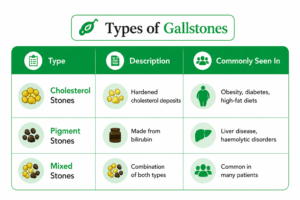
Gallstones form when substances in bile, mainly cholesterol or bilirubin, harden into solid deposits inside the gallbladder. Some people develop a single large stone, while others have multiple smaller stones.
What Causes Gallstones?
Gallstones develop when bile chemistry becomes imbalanced or when the gallbladder does not empty properly.
Common Risk Factors
| Risk Factor | How It Increases Risk |
| Obesity | Raises cholesterol levels in bile |
| Diabetes | Affects gallbladder function |
| High-fat diet | Promotes cholesterol stone formation |
| Rapid weight loss | Causes bile to become concentrated |
| Pregnancy and hormones | Increased estrogen levels |
| Liver cirrhosis | Alters bile composition |
| Family history | Genetic predisposition |
| Age over 40 | Higher incidence of gallstones |
Women are generally more likely to develop gallstones than men.
Reach Out for Expert Care
Symptoms of Gallstones
Many gallstones cause no symptoms and may never require treatment (silent gallstones).
When symptoms occur, they often include:
- Pain in the upper right abdomen
- Pain after eating fatty meals
- Nausea or vomiting
- Bloating and indigestion
- Pain radiating to the back or right shoulder
- Persistent upper abdominal discomfort
What Does a Gallstone Attack Feel Like?
A gallstone attack, also called biliary colic, typically causes:
- Sudden upper abdominal pain
- Pain lasting 20 minutes to several hours
- Symptoms after a heavy or fatty meal
- Pain spreading to the shoulder or back
- Nausea or vomiting
The pain occurs when a gallstone temporarily blocks the gallbladder.
Complications of Untreated Gallstones
Ignoring symptomatic gallstones can lead to serious health problems.
| Complication | What Happens |
| Acute Cholecystitis | Infection and inflammation of the gallbladder |
| Choledocholithiasis | Stone blocks the common bile duct |
| Cholangitis | Severe bile duct infection |
| Gallstone Pancreatitis | Inflammation of the pancreas |
| Gallbladder Empyema | Pus collection within the gallbladder |
| Gallbladder Cancer | Increased risk with long-standing stones |
Although not every patient develops complications, the risk increases once symptoms begin.
How Are Gallstones Diagnosed?
Ultrasound Abdomen
The most accurate first-line test for detecting gallstones. It can also identify gallbladder inflammation and bile duct enlargement.
Liver Function Tests (LFTs)
Used to detect bile duct obstruction and jaundice.
MRCP
A specialised MRI scan that provides detailed images of the bile ducts and helps identify duct stones.
ERCP
Endoscopic Retrograde Cholangiopancreatography is a procedure that can both diagnose and remove stones from the bile ducts.
CT Scan
Used when complications such as pancreatitis, perforation, or gallbladder cancer are suspected.
Gallstones in Patients with Liver Disease
Gallstones are more common in patients with liver cirrhosis and advanced liver disease.
These cases require special attention because cirrhosis can affect blood clotting, increase surgical bleeding risk, and make gallbladder surgery more technically challenging. In some patients, treatment may involve ERCP before surgery, while others may require management as part of a liver transplant pathway.
This is where expertise in both hepatobiliary surgery and liver transplantation becomes particularly important. Treatment decisions should be individualised based on liver function and overall health.
Reach Out for Expert Care
Gallstones Treatment Options in Gurgaon
Treatment depends on symptoms, stone location, and the presence of complications.
Treatment Overview
| Treatment | When It Is Used |
| Observation | Silent gallstones without symptoms |
| ERCP | Stones in the bile duct |
| Laparoscopic Cholecystectomy | Symptomatic gallstones |
| Robotic Surgery | Selected complex cases |
| Open Surgery | Severe inflammation or difficult anatomy |
Observation
Gallstones discovered incidentally and causing no symptoms can often be monitored without surgery.
ERCP for Bile Duct Stones
When a stone blocks the common bile duct, ERCP is usually performed to remove the obstruction before gallbladder surgery.
Laparoscopic Cholecystectomy
Laparoscopic surgery for gallbladder removal is considered the gold-standard treatment for symptomatic gallstones.
The procedure involves:
- General anaesthesia
- Three to four small incisions
- Camera-guided removal of the gallbladder
- Short hospital stay
- Faster recovery than open surgery
Most patients return home within 24–48 hours.
Robotic Gallbladder Surgery
Robotic surgery may be useful in selected patients with previous abdominal surgeries, dense adhesions, or complex anatomy requiring greater precision.
Read more about the cost of Robotic Surgery
Open Gallbladder Surgery
Open surgery is reserved for complicated cases where minimally invasive surgery cannot be safely completed.
Recovery After Gallbladder Surgery
Recovery after laparoscopic cholecystectomy is usually quick.
| Recovery Milestone | Typical Timeline |
| Walking | Same day |
| Hospital discharge | 1-2 days |
| Return to desk work | 5-7 days |
| Normal daily activities | 1-2 weeks |
| Full recovery | 2-3 weeks |
The liver continues producing bile normally after surgery, and most patients eventually return to a regular diet.
Diet for Patients with Gallstones
Diet can help reduce symptoms but cannot remove existing gallstones.
Foods to Eat
✅ Fruits and vegetables
✅ Whole grains and oats
✅ Lean proteins
✅ Small, frequent meals
✅ Healthy fats in moderation
Foods to Limit
❌ Fried foods
❌ Excessively oily meals
❌ Butter, cream, and high-fat dairy products
❌ Sugary foods and refined carbohydrates
❌ Crash diets and prolonged fasting
Cost of Gallstone Surgery in Gurgaon
The cost of laparoscopic gallbladder surgery in Gurgaon generally ranges from ₹45,000 to ₹1,80,000.
Factors affecting the final cost include:
- Complexity of surgery
- Hospital room category
- Length of hospital stay
- Need for ERCP
- Insurance coverage
- Associated medical conditions
A personalised estimate is usually provided after consultation and evaluation.
Why Consult Dr. Ankur Garg for Gallstones Treatment in Gurgaon?
Dr. Ankur Garg is a senior HPB Surgeon and Liver Transplant Specialist at Paras Hospital, Gurgaon, with extensive experience in treating gallstones, bile duct disorders, liver disease, and complex hepatobiliary conditions.
Patients benefit from:
- Advanced laparoscopic and robotic surgery
- Expertise in bile duct and pancreatic disorders
- Experience managing gallstones in cirrhosis patients
- Access to MRCP, ERCP, and surgery under one roof
- Multidisciplinary liver and biliary care
For patients experiencing recurrent gallstone attacks, jaundice, bile duct stones, or complications, consultation with Dr. Ankur Garg can help prevent emergencies and ensure the most appropriate treatment plan.
- Gallstones Treatment in Gurgaon
- Evaluation for gallbladder or bile duct disorders
- Personalised treatment planning for liver disease
Frequently Asked Questions
Do all gallstones require surgery? expand_more
No. Silent gallstones without symptoms can often be monitored. Surgery is usually recommended when pain, infection, jaundice, or other complications occur
Can gallstones be treated without surgery? expand_more
Medication may help dissolve selected cholesterol stones, but recurrence is common. Surgery remains the most effective treatment for symptomatic gallstones.
Is laparoscopic gallbladder surgery safe? expand_more
Yes. It is one of the most commonly performed abdominal surgeries.
How long does recovery take after gallbladder surgery? expand_more
Most patients return to routine activities within one to two weeks and achieve full recovery within two to three weeks.

Dr. Ankur Garg's Medical Content Team
Dr. Ankur Garg’s medical content team specialises in creating accurate, clear, and patient-focused healthcare content. With strong clinical understanding and expertise in technical writing and SEO, the team translates complex medical information into reliable, accessible resources that support informed decisions and uphold Dr. Ankur Garg’s commitment to quality care.

 WhatsApp