
Bile Duct Cancer Treatment in India
Bile duct cancer or cholangiocarcinoma is a rare (globally, roughly 3% of all gastrointestinal malignancies) but aggressive cancer that develops in the bile ducts. This cancer is often difficult to detect early because symptoms may not appear until the disease has already progressed. Many patients are diagnosed after developing jaundice, itching, abdominal pain, unexplained weight loss, or digestive problems.
Bile duct cancer treatment in India has advanced with the availability of expert HPB surgeons, robotic surgery, targeted therapy, liver resection procedures, and multidisciplinary cancer care.
At Paras Hospital, Gurugram, bile duct cancer treatment is led by Dr. Ankur Garg, a senior HPB and liver transplant surgeon with extensive experience in managing complex cholangiocarcinoma cases. Patients have access to advanced surgical procedures, robotic HPB surgery, medical oncology, and coordinated, multidisciplinary care tailored to the tumour stage.
What is Bile Duct Cancer?
Bile duct cancer, medically known as cholangiocarcinoma, is a cancer that starts in the bile ducts. These ducts transport bile (a digestive fluid produced by the liver) to the small intestine, where it helps digest fats and remove waste products from the body.
Depending on where the cancer develops, bile duct cancer may be classified as:
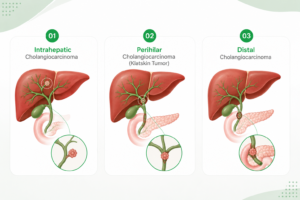
- Intrahepatic cholangiocarcinoma (inside the liver)
- Perihilar cholangiocarcinoma or Klatskin tumour (near the liver hilum)
- Distal cholangiocarcinoma (closer to the pancreas and small intestine)
What Causes Bile Duct Cancer?
The exact cause of cholangiocarcinoma is not always known, but DNA mutations and certain conditions may increase the risk of developing bile duct cancer.
Common risk factors include:
- Chronic inflammation of the bile ducts
- Primary sclerosing cholangitis (PSC)
- Liver cirrhosis and chronic liver disease
- Bile duct cysts or congenital abnormalities
- Gallstones and recurrent bile duct infections
- Hepatitis B and Hepatitis C infection
- Diabetes and obesity
- Smoking and excessive alcohol intake
In many patients, biliary malignancy develops without a clear identifiable cause.
Reach Out for Expert Care
Types of Bile Duct Cancer
Bile duct cancer is classified into 3 main types according to the location of the tumour.
-
Intrahepatic Cholangiocarcinoma
Represents about 10% of all bile duct cancer cases
This cancer develops inside the liver in the smaller bile ducts. It may initially resemble liver cancer and is often detected at a later stage.
-
Perihilar Cholangiocarcinoma (Klatskin Tumour)
It’s the most common type, accounting for roughly 50% to 60% of cases
This is the most common type and occurs where the right and left bile ducts join near the liver hilum. These tumours are technically challenging and require specialised HPB surgical expertise.
-
Distal Cholangiocarcinoma
Accounts for about 20% to 40% of all bile duct cancers
This type develops closer to the small intestine and pancreas. Surgery for distal bile duct cancer often involves a Whipple procedure.
Symptoms of Bile Duct Cancer
Jaundice, loss of appetite, dark urine and pale coloured stools are some of the common signs of bile duct cancer. Symptoms may vary depending on the location and stage of the tumour.
Common symptoms include:
- Yellowing of the skin and eyes (jaundice)
- Dark urine
- Pale or clay-coloured stools
- Persistent itching
- Pain in the upper abdomen
- Loss of appetite
- Sudden weight loss
- Fever and chills
- Fatigue and weakness
Patients with persistent jaundice or abnormal digestive symptoms should seek HPB specialist evaluation without delay.
Diagnosis of Bile Duct Cancer in India
Accurate diagnosis of bile duct is important to determine whether the bile duct tumour can be removed surgically and whether the cancer has spread.
Diagnostic tests may include:
- Liver function tests (LFT)
- Tumour markers such as CA 19-9 and CEA
- Ultrasound abdomen
- CT scan and MRI scan
- MRCP (Magnetic Resonance Cholangiopancreatography)
- PET CT scan
- ERCP (Endoscopic Retrograde Cholangiopancreatography)
- Endoscopic ultrasound (EUS)
- Biopsy and histopathology
- Molecular profiling and NGS testing
Advanced imaging helps surgeons assess liver involvement, vascular anatomy, and resectability before planning surgery.
Bile Duct Cancer Treatment Options in India
Treatment of bile duct cancer depends on the type, stage, location of the tumour, liver function, and the patient’s overall condition.
Surgery options for Bile Duct Cancer
Surgery offers the best chance of long-term survival when the tumour can be completely removed.
Depending on the tumour location, surgery may involve:
- Liver resection (hepatectomy): Removal of the part of the liver affected by the tumour.
- Bile duct removal and reconstruction: Diseased bile ducts are removed and bile flow is surgically restored.
Learn more about biliary disease treatment options
- Whipple surgery (pancreaticoduodenectomy): Complex surgery for tumours near the pancreas and lower bile duct.
Learn more about Whipple Surgery cost
- Lymph node dissection: Nearby lymph nodes are removed to check for cancer spread.
Learn more about Bile duct surgery
In selected cases, affected blood vessels are repaired or reconstructed during surgery vascular reconstruction
Chemotherapy
Chemotherapy may be recommended in certain cases after surgery to reduce recurrence risk of cancer or;
- Before surgery in selected advanced cases
- As primary treatment when surgery is not possible
Gemcitabine and cisplatin remain among the commonly used chemotherapy combinations for advanced cholangiocarcinoma.
In selected advanced cases, molecular profiling may help identify targeted therapy or immunotherapy options.
Reach Out for Expert Care
Palliative Care and Biliary Drainage
When surgery is not possible, treatment focuses on relieving symptoms and improving quality of life.
Procedures may include:
- ERCP stenting: A stent is placed endoscopically to relieve bile duct blockage and improve bile flow.
- PTBD drainage: A tube is inserted through the skin into the bile ducts to drain obstructed bile externally or internally.
- Pain management: Medications and supportive therapies help control cancer-related pain.
- Nutritional support: Specialised dietary care helps maintain strength, weight, and recovery during treatment.
- Palliative chemotherapy: Chemotherapy aimed at slowing cancer growth, relieving symptoms, and improving quality of life.
Relieving bile duct obstruction often helps reduce jaundice, itching, and infection risk.
Why Choose India for Bile Duct Cancer Treatment?
India offers advanced cholangiocarcinoma treatment with expert HPB surgeons, modern cancer infrastructure, multidisciplinary care, and lower treatment costs for international patients.
- Experienced HPB and liver transplant surgeons for complex biliary tract cancers
- Advanced robotic and minimally invasive GI cancer surgery facilities
- Multidisciplinary tumour board planning for personalised treatment
- Modern imaging, radiation oncology, and interventional radiology support
- International-standard treatment at comparatively lower overall costs
Patients from Africa, Bangladesh, Iraq, the Middle East, and neighbouring regions frequently travel to India for specialised cholangiocarcinoma treatment, second opinions, and complex liver and bile duct surgery.
Why Patients Trust Dr. Ankur Garg for Cholangiocarcinoma Treatment?
Dr. Ankur Garg is an experienced HPB and liver transplant surgeon with expertise in the management of complex liver, pancreatic, and bile duct cancers.
Key highlights include:
- 25+ years of surgical experience
- Expertise in hepatectomy and Whipple surgery
- 4500+ liver transplants
- Advanced robotic and minimally invasive HPB surgery
- 95% success rate
- Multidisciplinary cancer care approach
- Experience managing recurrent and advanced bile duct cancers
- International patient support and second opinion services
At Paras Health Gurugram, treatment planning is tailored individually for every patient to ensure the most appropriate and evidence-based care pathway.
Book a Consultation for Cholangiocarcinoma Treatment in India
Early assessment by an experienced hepatobiliary and liver cancer specialist is critical for determining whether surgery, liver resection, bile duct reconstruction, transplantation, or advanced oncological treatment may be possible.
Consult Dr. Ankur Garg for expert cholangiocarcinoma treatment planning, advanced bile duct cancer surgery, liver resection, and multidisciplinary cancer care in India.
During your consultation, Dr. Ankur Garg will provide:
- Detailed clinical evaluation and review of symptoms, scans, and biopsy reports
- Assessment of tumour location, stage, vascular involvement, and surgical resectability
- Review and interpretation of CT scan, MRI, MRCP, PET-CT, and pathology findings
- Clear explanation of all available treatment options, including surgery, chemotherapy, radiotherapy, and palliative procedures
- Multidisciplinary treatment planning tailored to your overall liver health and cancer stage
- Transparent discussion regarding expected recovery, risks, hospital stay, and overall treatment pathway
If you or a family member has been diagnosed with bile duct cancer, early consultation can help clarify the diagnosis, explore treatment options, and avoid delays in care.
Contact today to schedule your consultation with Dr Ankur Garg
Frequently Asked Questions
Can bile duct cancer spread to the liver? expand_more
Yes. Cholangiocarcinoma may spread locally within the liver, nearby lymph nodes, blood vessels, or distant organs if not treated early.
Is bile duct cancer curable? expand_more
Bile duct cancer can be treated successfully in selected patients if diagnosed early and the tumour can be completely removed with surgery.
What is the best treatment for bile duct cancer? expand_more
Treatment depends on the stage and location of the tumour. Options may include liver resection, bile duct reconstruction, Whipple surgery, chemotherapy, targeted therapy, radiation therapy, and biliary drainage procedures.
Why Does Early Diagnosis of Bile Duct Cancer Matter? expand_more
Early diagnosis improves the chances of complete bile duct tumour removal, access to curative surgery, better treatment outcomes, and lower risk of cancer spread.
Why do international patients choose India for bile duct cancer treatment? expand_more
India offers experienced HPB surgeons, advanced robotic and liver surgery facilities, multidisciplinary cancer care, shorter waiting times, and comparatively lower treatment costs for complex cholangiocarcinoma treatment.

Dr. Ankur Garg's Medical Content Team
Dr. Ankur Garg’s medical content team specialises in creating accurate, clear, and patient-focused healthcare content. With strong clinical understanding and expertise in technical writing and SEO, the team translates complex medical information into reliable, accessible resources that support informed decisions and uphold Dr. Ankur Garg’s commitment to quality care.

 WhatsApp