
Robotic Liver Surgery in India
Advanced robotic liver surgery for complex liver conditions, combining exceptional surgical precision, minimally invasive techniques, and enhanced recovery.

Book a Consultation
Connect with our specialists for personalized guidance.
What Is Robotic Liver Surgery (robotic hepatectomy)?
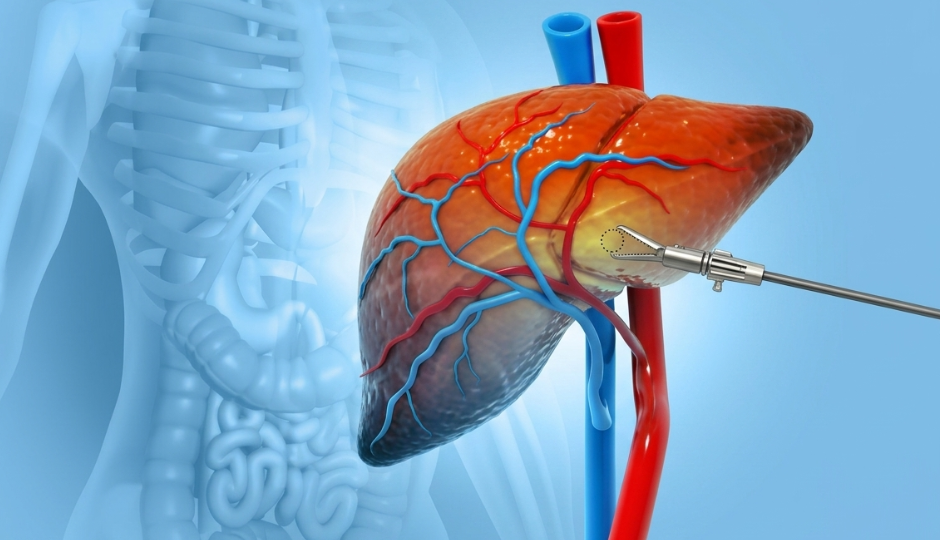
Robotic liver surgery is a form of minimally invasive surgery where the surgeon operates using a robotic system, rather than operating directly with hands inside the body.
The surgeon sits at a console a few feet from the operating table. Using hand and foot controls, they manipulate robotic arms that hold a high-definition 3D camera and surgical instruments inside the patient’s abdomen. The instruments have a wrist-like range of motion; they can rotate 360° and reach angles that human hands through ports simply cannot.
Three things make robotic surgery different from standard laparoscopic surgery:
- 3D Vision vs 2D Laparoscopic surgery uses a flat, 2D camera image. Robotic surgery uses a magnified, 3D high-definition view, giving the surgeon true depth perception inside the abdomen.
- Instrument Articulation: Laparoscopic instruments are straight and rigid. Robotic instruments have seven degrees of freedom; they bend and rotate like a wrist.
- Tremor Filtration: The robotic system automatically filters out natural hand tremor.
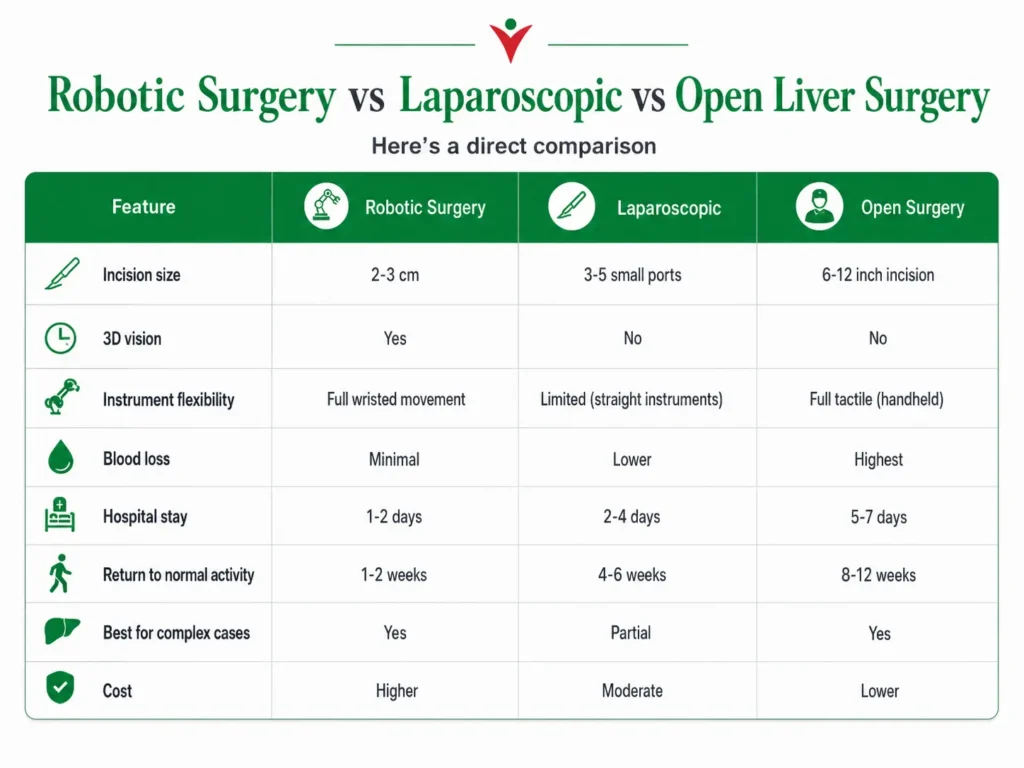
Robotic Surgery vs Laparoscopic vs Open Liver Surgery
Patients often ask which approach is better. The best treatment approach of liver resection depends on the patient, the tumour. Here is a direct comparison between laparoscopic, robotic and open surgery:
Robotic liver surgery is the most advanced form of minimally invasive liver surgery, offering high-definition 3D visualisation, wristed instruments with greater flexibility, and enhanced precision during complex liver resections. These features can help surgeons operate more accurately in difficult-to-reach areas while preserving healthy liver tissue whenever possible.
Laparoscopic liver surgery is also minimally invasive and remains an excellent option for carefully selected patients. However, compared with robotic surgery, laparoscopic instruments have a more limited range of motion and rely on a two-dimensional camera view, which may make liver procedures more technically challenging.
Open liver surgery continues to play an essential role in treating very large tumours, advanced cancers, extensive liver resections, or situations where minimally invasive surgery is not suitable. It provides direct access to the liver and remains the preferred approach for selected complex cases.
Robotic Liver Surgery and Liver Cirrhosis – What Patients Need to Know
Patients with liver cirrhosis require especially careful pre-operative planning before any liver resection. Cirrhotic livers bleed more easily, regenerate more slowly, and tolerate resection less well than healthy livers.
In selected cirrhosis patients with early liver cancer and adequate liver function, robotic resection is feasible, and the reduced blood loss compared to open surgery is an advantage.
In advanced cirrhosis, resection of any kind may not be safe, and liver transplant becomes the better option.
This is precisely why the surgeon performing robotic liver surgery should have transplant expertise, so the line between resection and transplant is drawn correctly for each patient.
Robotic Liver Surgery Cost in India
Robotic liver surgery is more expensive than laparoscopic or open surgery primarily because of the cost of the robotic system and its single-use instruments.
The cost of robotic liver surgery in India may range from approximately ₹3.5 lakh to ₹22 lakh. An accurate treatment cost estimate can only be provided after a detailed clinical evaluation and review of diagnostic investigations.
At LivCure India, robotic liver surgery is performed with a strong focus on patient safety, precision, and personalised treatment planning. Every case is carefully evaluated by a multidisciplinary team to determine whether a robotic approach is the most appropriate option based on the patient's condition, tumour characteristics, liver function, and overall health.
Expertise you can Trust
Advanced Liver Care, Proven by Numbers
Looking for the Best Robotic Liver Surgery in India?
Expert liver care. Advanced robotic technology. Personalised treatment for every patient.
At LivCure India, Dr. Ankur Garg and the multidisciplinary liver team provide personalised evaluations to determine whether robotic liver surgery, laparoscopic liver surgery, or open liver surgery is the most appropriate treatment for your condition.
If you're searching for the best robotic liver surgeon in India, robotic liver surgery cost in India, or want a second opinion on your treatment plan, schedule a consultation with our experts today. We are committed to delivering precise, minimally invasive liver surgery with a focus on patient safety, faster recovery, and optimal clinical outcomes.
Find Your Nearest Centre For Robotic Liver Surgery in India
Each centre offers the same programme, led by the same core team, so you can choose based on location and convenience.


Frequently Asked Questions
Can robotic surgery remove liver cancer? expand_more
Yes. Robotic liver surgery can be used to remove selected liver cancers (HCC) while preserving as much healthy liver tissue as possible, when clinically appropriate.
What conditions can be treated with robotic liver surgery? expand_more
Robotic surgery may be used for liver cancer, liver tumours, colorectal liver metastases, benign liver lesions, liver cysts, and selected bile duct cancers, depending on the patient's condition.
How many days do I need to stay in the hospital? expand_more
Many patients stay in the hospital for 3–5 days, although the exact duration depends on the type of surgery and recovery progress.
Are there scars after robotic liver surgery? expand_more
Yes, but the scars are usually much smaller than those from traditional open liver surgery.
Is robotic liver surgery covered by insurance? expand_more
Many health insurance plans cover robotic liver surgery if it is medically indicated. Coverage depends on your insurer and policy terms.